From stores to Kevin Sorbo, the sect runs a quiet business empire, and it’s centered upstate.
By William Bredderman, an investigative journalist covering covert influence and corruption
hen Diana, the second-floor clerk at the New Middletown shopping center, hears I’m visiting from the city, she insists I see Shen Yun at Lincoln Center.
“It’s traditional Chinese culture,” she tells me. “No communism!”
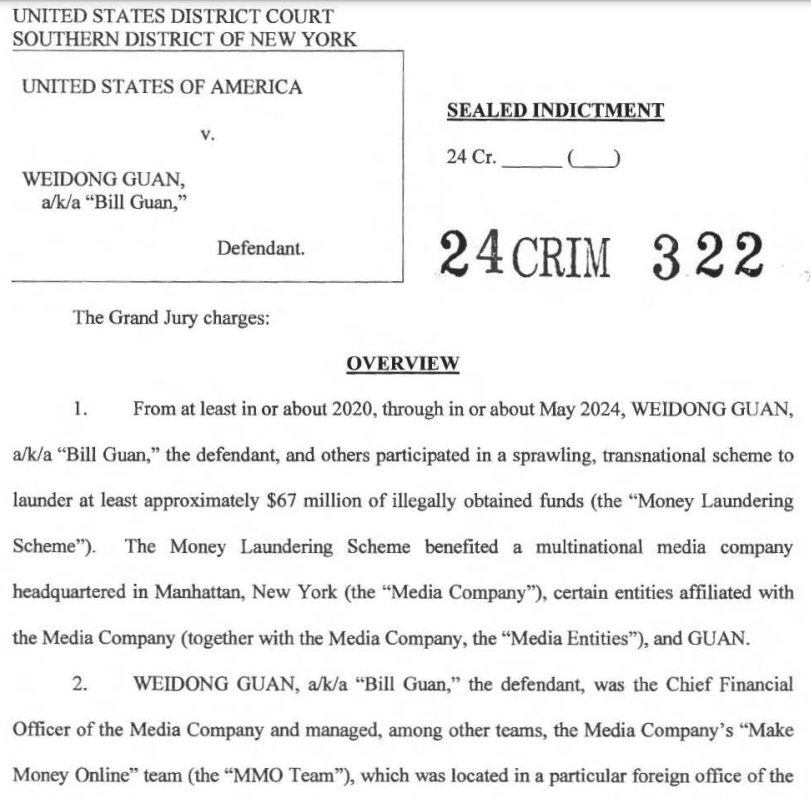
Shen Yun, of course, is the traveling agitprop dance troupe controlled by Falun Gong, a religious movement born in China in the early 1990s that today has its headquarters at a 400-acre estate in the woods of upstate New York. Two other well-known mouthpieces of the movement are The Epoch Times newspaper and its television affiliate, New Tang Dynasty, or NTD, notorious trumpets of right-wing disinformation. Both outlets made news in June when Epoch CFO Weidong “Bill” Guan was indicted for allegedly running a $67 million money-laundering scheme and the media conglomerate’s founder, Zhong “John” Tang, subsequently resigned.
But for all the noise Epoch has made lately, much of Falun Gong’s business operates silently, like this bright, glossy shopping center on a weekday afternoon. Shelves of Falun Gong literature bank the stairhead, and the rest of the store, laid out like a flea market, offers a panoply of imported foods and kitchenware products — most from East Asia — as well as jewelry, stationery, accessories, and apparel.
Located 20 minutes east of the main Falun Gong compound, Middletown is experiencing a slow-motion annexation by the sect. Through its various arms, it has acquired over $18 million in real estate in this working-class town of 30,000 residents — not counting the many more properties its adherents and their companies have purchased in recent years. As with many things here, peel back the veneer and you’ll find Guan, Tang, and the Epoch media operation behind them. Shen Yun Collections acquired the shopping center last year from Universal Communications Network, the company through which the two men ran NTD.
Next to the New Middletown checkout counter are promotions for Gan Jing World, a “clean content” app that lifts videos from YouTube and splices them with NTD, Epoch, and Shen Yun content. Gan Jing World’s headquarters is a squat four-story office building a five-minute walk from the store, facing a fossilized factory plastered with chiropractor ads. One of the start-up’s vice-presidents moved to Middletown from San Francisco, where she had worked as president of Epoch’s branch there. Earlier this year, Gan Jing World assured an inquiring reporter from Columbia Journalism Review that the company is just “friends” with Epoch and not formally affiliated. Yet an executive from Epoch’s Texas office helpfully undercut this claim by filing incorporation paperwork for the “Falun Dafa Gan Jing World Foundation” at the app’s new Middletown digs in 2023. That entity, in turn, bought two adjacent properties from Universal Communications: a storage facility that today provides extra parking to the app’s employees, and a defunct Honda dealership that’s now a soundstage called GJW Studios.
Meanwhile, across the street from the New Middletown center is Dayes Coffee Roasters, which is undergoing renovations and slated to reopen soon. The windows may be papered over, but it’s easy to peer through the façade. Trademark records show Dayes belongs to a firm called World Fortunes Inc., which Guan and Tang founded in 2015. (World Fortunes also, until recently, operated an auto-repair shop in Middletown’s south end.) The Epoch Times extols the brand’s “enzyme-fermented” brew, which is supposedly free from the toxic mold that festers in regular coffee.
Dayes’ website boasts a roastery on the town’s western fringe, on a stretch of scabby road populated mostly by aluminum-sided Cape Cods. Universal Communications owns this location, too. The gleaming café space wasn’t operational yet, but a man sat in an adjoining garage amid packing detritus and chrome roasting equipment. He pointed me up a hill, advising I would find an open Dayes shop in a former psychiatric center the city sold in 2017 to Falun Gong’s Fei Tian College, which last fall turned it over to a nonprofit controlled by Tang and Guan.
The cluster of brick buildings in various stages of rehabilitation reflects the extent to which Epoch has insinuated itself into the community. Under the leadership of Mayor Joseph DeStefano, Middletown continues to buy abandoned structures at the former sanitarium from the state and transfer them to Falun Gong–linked entities. The city also sold off a former community center in 2021 that now serves as the recording studio of the Epoch-affiliated Sound of Hope radio network.
DeStefano told me all deals had gone through a formal public-approval process.
“They’re spending millions and millions of dollars renovating buildings that were abandoned by the State of New York and that nobody else was interested in, I might add,” the mayor said. “I’ve never dealt with a more straightforward and honest group of people in my life.”
Sadly, the Dayes café on campus was empty except for one guy painting the ceiling. “We open tomorrow,” he said.
No matter, though: Dayes beans are available online — and online is where the greater part of Epoch’s dominion lies. Dayes, for instance, is sold on a site called BestGift.com, which is controlled by yet another Tang-founded company based in the Epoch offices. BestGift calls itself “an official retail partner of The Epoch Times” and offers discounts to the paper’s paying subscribers. The target market is evident in the lead image on the site: a group of white senior citizens toasting with white wine outdoors. Besides java, it hawks garden products, decorative mailboxes, soaps, and joint-pain supplements.
Meanwhile, World Fortunes, the owner of Dayes, also operates Beauty Within, a website on which a pair of 30-something podcaster-influencers push various skin-care products for young women — ones often similar to cosmetics that shipping manifests show World Fortunes has imported from South Korea to a Middletown address. Epoch and NTD promote Beauty Within content, while the hosts promote Falun Gong. Their YouTube account has over 2 million followers.
Another World Fortunes project is Youlucky.biz, which is aimed at the Chinese-speaking diaspora. Paying subscribers can watch translations of Epoch’s YouTube series American Thought Leaders, featuring interviews with the likes of Grover Norquist and Christopher Rufo. They can also shop its “Mall” section for beauty products, clothing, and electronics.
Gan Jing World, meanwhile, offers not just the app content but a subscription service called GJW+, which streams low-budget-looking animated programming and documentaries, and a Gan Jing Campus product that provides Falun-flavored educational videos.
Even more ambitious is one of the last ventures Guan launched before his arrest: Epoch Studios’ first feature-length film, starring Cuba Gooding Jr. and conservative favorite Kevin Sorbo (a.k.a. Hercules, if you grew up in the 1990s). Called The Firing Squad, it is loosely based on Indonesia’s 2015 execution of a group of drug traffickers, some of whom had converted to Evangelical Christianity. “I found Christ in here,” Sorbo’s character relates over the trailer’s stirring strings. “I found Christ too,” rasps Gooding.
The trailer boasts that the film has the same marketing team as The Passion of the Christ and Sound of Freedom, and its website has adopted the latter’s strategy of urging supporters to buy out multiple seats or even whole theaters in a campaign to “bring one million souls to Jesus.” The flick hit screens, including two movie houses in Middletown, on August 2.
The question, of course, is why: Why all the side hustles, why take over an upstate town?
A former Epoch Times staffer who requested anonymity recalled the business struggling when they worked there a decade ago. Reporters labored for paltry salaries at Ikea desks they assembled themselves, and they depended in part on meals a Falun Gong practitioner cooked for them at the office. Epoch toggled through consecutive unsuccessful business models — free content with ads, paywalls, print delivery — and survived on donations from wealthy believers. “It has all the problems other companies face in digital,” the former staffer said, suggesting that all the ancillary companies represent efforts to find additional revenue.
Epoch simply might have arrived at the same conclusion as other 21st-century publications: The news business just isn’t business enough, and a media venture must become a lifestyle brand for its consumers. Seen this way, Middletown — where your shopping and coffee and education and entertainment and even, till recently, your oil change can send money back to Falun Gong and its media affiliates — begins to look like the Epoch empire in microcosm.
There are means of taking in cash besides operating a profitable enterprise, however, and having numerous corporate faces can prove useful for this, too. For instance, The Firing Squad website urges supporters to invest in the movie — and to mail checks to a Guan company located in Epoch’s offices. This has reaped more than $2 million to date.
That’s a pittance compared to the $46 million and counting in federal grants and loans that Epoch, Shen Yun, Falun Gong, and assorted subsidiaries obtained during the pandemic. Further, federal prosecutors in the money-laundering case against Guan allege he had “fraudulently procured unemployment insurance benefits obtained using stolen personal identification information” via various “media entities.” Epoch, Guan’s attorney, and Tang did not respond to requests for comment.
Working behind various corporate curtains also grants a degree of secrecy. A woman walking her dog in the park, the elderly couple I accosted en route to dinner, the bartender at the local brewpub (every Hudson Valley town has one) all told me they hadn’t noticed much that had changed around town except the Chinese names appearing over local businesses and some additional Asian Americans on the streets.
“Everything honestly seems like the same,” Meghan, the woman with the dog, told me.
Ignorance was also Mayor DeStefano’s plea. Enjoying regular friendly coverage and his own tag on Epoch’s website, the long-reigning Democrat cut the ribbon at the opening of the New Middletown center, appeared at multipleGan Jing World events, and has issued repeated proclamations for “World Falun Dafa Day” — even praising the sect’s work toward a “peaceful, tolerant, more compassionate society.”
Through Election Day, the campaign headquarters of the Orange County Democratic Party will be housed in a freshly renovated property opposite the shopping center, owned by a Flushing-based Falun Gong activist who has repeatedly appeared in TheEpoch Times. The refreshed façade is owed to a $25,000 city-administered loan to the new owner that DeStefano signed off on in 2019.
DeStefano, the former party chair, admitted to helping arrange the lease but said he had shown his fellow Democrats several locations and underscored the official protocols the loan went through.
He denied knowing that the property owner is linked to the movement — in fact, he denied knowing that many of the new investors in Middletown are involved in Epoch and Falun Gong. He also denied any awareness of Falun Gong’s founder having denounced homosexuality as “filthy” and “repulsive” or of the cult’s history of alleged racial discrimination. He added that he had never met Tang or Guan, even though companies the two created control growing swaths of his city.
What matters, DeStephano argued, is that new residents and “several millions of dollars” are pouring in and that down-in-the-mouth brick storefronts are getting fixed and filled. He said he’d never had any interest in tracing Epoch’s web, even as it entangled his town. “I don’t do a background check on people we’re dealing with,” he said. “That’s none of my business.”
The popular Chinese dance troupe has toured all over the world. But young performers described a culture of untreated injuries and emotional manipulation.
Good morning. It’s Monday. We’ll look at findings from The Times’s investigation of the Shen Yun dance troupe. We’ll also see what’s in the waters off New York through the eyes of divers who look for shipwrecks and treasure.
The dance group Shen Yun sends troupes of Chinese dancers swirling in colorful costumes to cities like New York, Paris, Toronto and Taipei. Shen Yun’s mission is more than entertainment: The shows amplify the anti-Communist message of Falun Gong, a religious movement that the Chinese Communist Party has tried to stamp out. Shen Yun has been led in exile by Falun Gong’s founder, Li Hongzhi, from a 400-acre compound in upstate New York, where many of the performers live and train.
What Shen Yun audiences may not have realized was that offstage the performers paid a price in untreated injuries and emotional abuse. A New York Times investigation found that Shen Yun routinely discouraged them from seeking medical care and demanded obedience to rigid schedules. I asked Nicole Hong, who with Michael Rothfeld interviewed 25 former Shen Yun performers and instructors and reviewed hundreds of pages of records, about their findings.
What is the atmosphere like at the Shen Yun compound in upstate New York? Are the performers under a lot of pressure?
Our reporting showed that it was a controlling atmosphere and that the young student performers were subject to a long list of rules. They were limited in the books they could read, the music they could listen to and the news outlets they could access. They needed special permission to leave the compound and often saw their families only once a year.
They faced a tremendous amount of pressure to serve their spiritual leader, who has a residence inside the compound and helps oversee their training. They were told that performing with Shen Yun was part of a holy mission to save humanity — and that any mistakes onstage could doom their audiences to hell.
What about body shaming? Isn’t that part of the culture?
Yes, for female dancers in particular.
The ones we interviewed told us that they were subjected to regular weigh-ins and that their instructors would yell at them in front of their classmates for being too fat.
Some of them had their eating monitored by classmates. One former dancer said that in her troupe everyone’s weights were recorded on a sheet posted in a classroom, with the names of dancers deemed to be too fat written in red.
This is one of the biggest differences between Shen Yun and other dance companies we examined. The former Shen Yun performers we interviewed told us that they did not have routine access to doctors or physical therapists. They said this was because their spiritual leader says in his teachings that true believers can expel illness from their bodies without medical treatment.
When Shen Yun performers were injured, they were told to heal themselves by “sending forth righteous thoughts,” or they were told that the injury signaled something was wrong with their spiritual state. Shen Yun’s representatives have denied discouraging medical treatment.
What about the performers’ schedules?
Their schedules were grueling. They often worked 15-hour days, sometimes performing two shows a day. While on tour, they had bus rides between venues that could drag on for 16 hours at a time.
On top of rehearsing and performing, some of the performers also had to set up and break down heavy orchestra equipment before and after each tour stop for no extra pay.
Even though many of them were high school and college students, they spent months out of the year on tour. Just to give you a sense of their workload, the eight Shen Yun troupes staged more than 800 shows in a five-month period for their most recent world tour.
If a performer wanted to quit and leave the compound, what happened?
Many of the former performers we spoke to were terrified to quit because they were told that they would go to hell — or would be in physical danger without the protection of their spiritual leader. One former dancer told us that after she left she genuinely thought she might die at any moment in an accident.
Several former performers told us that when they tried to quit, they were told that they would have to repay the cost of the full scholarships they had received for their schooling, an amount that could have reached into the hundreds of thousands of dollars. No one ever followed through on seeking repayment.
How difficult was it to convince former dancers and instructors to be interviewed about their experiences?
It was an incredibly challenging process. Almost all of them were terrified to be quoted using their real names because they were fearful of retaliation and harassment from other Falun Gong practitioners. It took several rounds of interviews across many months to get nine people to share their stories on the record. We know they risked a lot to speak to us, and we’re so grateful for their courage.
The New York State Department of Labor has opened an inquiry into the global dance group and its treatment of the children and teenagers who stage its shows worldwide.
For years, New York labor regulators stood by while a prominent dance company headquartered in the state relied on children and teenagers to stage shows worldwide, earning tens of millions of dollars per season but offering little or no pay to the underage performers.
That changed in recent months when the State Department of Labor opened an inquiry into the group, Shen Yun Performing Arts.
The agency, which is tasked with enforcing laws on child labor, overtime and the minimum wage, declined to specify what it was examining. But the inquiry was opened following questions from The New York Times, which in August documented numerous instances of what legal experts and former performers describe as questionable labor practices by the group.
Shen Yun, which is operated by the Falun Gong religious movement from a guarded, 400-acre campus in Orange County northwest of New York City, requires its performers to keep grueling tour schedules and train under abusive conditions, former performers have said.
Many of its young dancers and musicians were the children of ardent Falun Gong practitioners and had traveled from overseas to enroll in school at Shen Yun’s headquarters, Dragon Springs. They received full scholarships, plus room and board, and were told performing was part of their studies. Many received no pay in their first year on tour.
“It seems like it’s perfectly reasonable,” said Eugene Liu, a violinist who said he performed in 200 Shen Yun shows over two years starting at age 15 but never received more than $300 a month. “But if you then consider the fact that these are all people with no ability to negotiate any kind of labor, wage situation, then I don’t know how this stands up.”
ndeed, Shen Yun appears to have spent years violating a state law designed to protect underage performers, The New York Times has found. The law requires performance groups to obtain state certification before using performers who are younger than 18, and it requires those performers to have work permits.
The law also governs working hours, rest time and education, including provisions for employers to provide time during the workday for academic instruction. And it specifies that 15 percent of a performer’s earnings go into a trust account, though it doesn’t address whether or how much the performers should be paid.
Former Shen Yun performers said their schooling during months on tour largely consisted of writing in journals between shows or filling out homework packets. They were not aware of having work permits or trust accounts.
The law does offer an exemption for performers “in a church, academy or school, including a dancing or dramatic school.” But Michael Maizner, an entertainment lawyer who specializes in labor issues, said that exemption would apply to something like a school pageant or choir, not a professional tour group such as Shen Yun.
Shen Yun has used underage performers for nearly 20 years but had not been certified before applying in late September, representatives of the Labor Department said. The application was approved, and Shen Yun must now give the department a 30-day notice if it plans to use children in a performance in New York State, officials said.
Shen Yun’s leaders have strenuously defended their labor practices. They denied breaking any laws and said that the youngest performers are not employees but students who receive a learning opportunity and often get a stipend.
“The vast majority of students will tell you this is their dream come true, and the parents rave about the positive changes in their children,” Shen Yun’s representatives, Ying Chen and Levi Browde, said in a statement.
They said that the students “are not employees under the factors authorities use to define those terms under federal law.”
“Therefore,” they said, “the allegations that they are not treated properly as employees are denied.”
It is not unusual for performing arts groups to pay students and novice performers nominal amounts. But few, if any, such groups rely on them to the extent that Shen Yun does, The Times found.
Combining elements of acrobatics and ballet, the group had eight troupes that collectively performed more than 800 shows on five continents during its most recent season.
Former dancers and musicians said individual troupes could perform more than 100 shows per season and that no troupe employed enough professionals to stage a show without student performers — an assertion Shen Yun’s representatives disputed.
Evan Glickman, a percussionist, spent two years with Shen Yun starting at age 24 and was paid about $35,000 a year, he recalled. In his troupe, about two-thirds of the musicians were students, he said.
Evan Glickman, a percussionist who used to play with Shen Yun’s orchestra, said the group relied heavily on student performers.Credit…The New York Times
“The students did everything,” said Mr. Glickman, who quit the show in 2016, exhausted by its rigorous touring schedule. “That place would not run if they had to pay real musicians, like every other organization in the country does.”
Former performers told The Times they worked from early morning until close to midnight while on tour. The young performers carried and set up heavy equipment, rehearsed, performed up to two shows a day and spent hundreds of hours on cross-country bus rides, according to former performers and written schedules.
A tour schedule from December 2016 showed that one Shen Yun troupe was slated to perform or travel on nine consecutive days without a break, including a 17-hour bus trip from Michigan to Texas.
A former Shen Yun bassoonist, Andreas Spyropoulos, recalled leaving a venue after a show and driving through the night toward another city, only to stop at a motel where multiple people had to sleep in each room.
Others said male performers were sometimes told to stay on the tour buses in overnight shifts in case Chinese government agents tried to sabotage the vehicles. (Falun Gong, a religion that is banned in China, has been persecuted by the Chinese government for almost three decades.)
Shen Yun’s representatives said the accounts described in this article were “extreme” examples that were “well beyond day-to-day norms in terms of hours, duties, travel schedules, etc.” They added that it was “quite rare” and voluntary for performers to guard the bus.
In a YouTube video posted last year, a current Shen Yun dancer, Sam Pu, described the arduous touring schedule as a positive.
In the video, Mr. Pu narrated a full day of work, starting in his hotel room around 7:30 a.m., continuing through a performance and ending back at the hotel at 11:20 p.m.
“I know my schedule looks really tiring,” Mr. Pu said, “but the thing is, I find it very meaningful that I am able to share the values of my culture with people all around the world.”
In a text message, Mr. Pu told The Times that he has never felt forced to do anything as a performer for Shen Yun and gets plenty of breaks to relax while on tour.
“It’s also worth mentioning that, unlike some other dance companies where artists have to cover their own travel and lodging or even take on side jobs just to make ends meet, Shen Yun covers everything for us,” Mr. Pu said.
Aside from the demanding schedules for student performers, Shen Yun stands apart from other large dance groups for the amount of money it has amassed while paying relatively small sums to its performers. In its most recent tax return, the company reported assets of more than $265 million.
The American Ballet Theater in New York City had only a fraction of that amount in recent years, tax records show. But its apprentices earn a starting pay of $986 per week under its contract with the American Guild of Musical Artists. The performers were also eligible for overtime, a benefit that former Shen Yun performers said they did not receive.
Although Shen Yun’s practices have been in place for years, the State Labor Department did not open an investigation — because the agency had never received a formal complaint, officials said. They declined to comment on why they opened the current inquiry.
The Labor Department has been cited in the past for inadequately enforcing the child performer laws.
In 2017, an audit by the New York State comptroller’s office found that the agency had taken a “reactive” approach of investigating only based on complaints.
“Complaints are less likely to come from children,” the auditors said, “particularly if both the parents/guardians and employers violate the law.”
The Labor Department disputed the audit’s findings and methodology at the time. In a statement this month, an agency spokesman said that since 2023, the department had conducted six proactive child labor sweeps and initiated more than 1,300 child labor investigations. He added that the department encouraged “workers of any age who believe their rights were violated to file a complaint.”
Legal experts say there are exceptions to state and federal minimum wage laws related to students, apprentices and volunteers. Shen Yun has often paid its student performers less than minimum wage, former dancers and musicians said.
“My suspicion is that they are treating these children and young people, even if they’re not minors, as maybe volunteers, maybe apprentices, and they’re using that as justification for not paying them,” said Michael Minkoff, an employment lawyer in Manhattan. “That doesn’t mean it’s legal by any stretch of the imagination.”
Chang Chun-Ko, a former Shen Yun dancer, moved to Dragon Springs from Taiwan at 13 and was paid around $500 a month when she started performing as a student, she said.
Chang Chun-Ko, a former Shen Yun dancer who joined the group as a child, worked at least 65 hours a week.Credit…The New York Times
In 2019, Shen Yun hired Ms. Chang, then 23, as a professional dancer. Her employment letter said she would be paid $1,000 a month to work 25 hours a week. Ms. Chang said she actually worked at least 65 hours a week.
Since Falun Gong teaches that followers should let go of material attachments, talking about money was seen in Shen Yun as a sign of poor devotion, Ms. Chang said. She said she had a feeling that she was paid too little, “but I didn’t dare to ask.”
Susan C. Beachy contributed research.
Michael Rothfeld is an investigative reporter in New York, writing in-depth stories focused on the city’s government, business and personalities. More about Michael Rothfeld
The dance group has accumulated enormous wealth, in large part by getting followers of the Falun Gong religious movement to work for free and pay its bills.
The reporters examined thousands of pages of records, including internal communications, and interviewed dozens of people about the finances of the dance group Shen Yun and the Falun Gong religious movement.
Dec. 29, 2024, 3:00 a.m. ET
Over the past decade, the dance group Shen Yun Performing Arts has made money at a staggering rate.
The group had $60 million in 2015.
It had $144 million by 2019.
And by the end of last year, tax records show, it had more than a quarter of a billion dollars, stockpiling wealth at a pace that would be extraordinary for any company, let alone a nonprofit dance group from Orange County, N.Y.
Operated by Falun Gong, the persecuted Chinese religious movement, Shen Yun’s success flows in part from its ability to pack venues worldwide — while exploiting young, low-paid performers with little regard for their health or well-being.
But it also is a token of the power that Falun Gong’s founder, Li Hongzhi, has wielded over his followers. In the name of fighting communism, and obeying Mr. Li’s mystical teachings, they have created a global network to glorify him and enrich his movement.
Under Mr. Li’s direct leadership, Shen Yun has become a repository of vast wealth for Falun Gong, often accumulating money at the expense of its loyal adherents, a New York Times investigation has found.
It has raked in funds through ticket sales — nearly $39 million in 2023 alone — but also by using religious fealty to command the free labor of its followers. It has received tens of millions of dollars more in ways that may have crossed legal or ethical lines, The Times found.
In one case, Shen Yun and a school that trains its dancers received $16 million from The Epoch Times, a newspaper run by Falun Gong followers, during a period when federal prosecutors said the publication’s accounts were inflated in a money-laundering conspiracy.
Shen Yun and a network of satellite organizations added more wealth by skirting rules to tap tens of millions of dollars in pandemic-era relief money.
And three former Shen Yun performers told The Times that they were used to ferry large amounts of cash into the United States, a possible attempt to circumvent laws about reporting U.S. currency transactions.
Shen Yun has kept its own costs down by wringing countless volunteer hours, and sometimes personal savings, from followers of Mr. Li, who has suggested he created the universe and instructed believers that Shen Yun performances can save people from a coming apocalypse by exposing them to his teachings.
Eager to heed Mr. Li, the followers have borne most of the financial burden for staging hundreds of Shen Yun shows around the world, including paying out of their own pockets to book venues, print fliers, buy advertising and sell tickets — even going into debt to cover upfront costs.
“They all think — including me before — we all think it is an important part of the path to godhood,” said Simone Gao, a former practitioner and Falun Gong media personality. “If you devote time, energy and money to this cause, the reward is incomparable to what you get in this world.”
It was not clear why Shen Yun has amassed so much money, or why nearly all of its assets — $249 million in 2023 — were kept in cash and other liquid instruments. Experts said it was unusual for a nonprofit not to invest such sums unless they were needed for significant short-term expenses, which Shen Yun has not seemed to have incurred.
Shen Yun’s representatives declined to answer questions about its finances. In the past, Mr. Li has said large sums of money were needed to battle the Chinese Communist Party, which has banned the movement and repressed its followers since the 1990s.
“For over 25 years, Falun Gong practitioners have struggled to peacefully resist persecution from the largest totalitarian regime on earth, and Shen Yun is a key part of that effort,” a Shen Yun spokeswoman, Ying Chen, said in a statement to The Times. “Your attempts to brand Shen Yun as a grand moneymaking scheme are shocking and deeply offensive.”
Ms. Chen accused The Times of making “gross distortions or blatant factual errors,” but she declined to elaborate.
As Shen Yun has amassed wealth, its supporters have purchased real estate for Mr. Li’s movement, including Falun Gong’s 400-acre headquarters, known as Dragon Springs, which is about 60 miles northwest of New York City.
They have also subsidized the lifestyle of Mr. Li, now in his early 70s, and his wife, Li Rui, a top manager in Shen Yun.
One follower gave the movement her life savings before dying of cancer, virtually penniless.
In recent years, Mr. Li and his aides have found yet another way to make money through Shen Yun. They have created companies that market products directly to Falun Gong followers, like a Tang Elegance necklace with a spessartite garnet for $3,850, Heavenly Phoenix earrings for $925, a $35 ornament of the Shen Yun tour bus and Shen Yun-branded athleisure clothing.
Practitioners have been told they should purchase the most up-to-date Falun Gong clothing for public events, including a reversible blue-and-yellow jacket for $120.
Business records show that Mr. Li personally started an online video platform that charges $199.99 a year for a subscription to watch Shen Yun performances. His associates also created another video platform, Gan Jing World, which was accused by YouTube in a lawsuit this month of stealing content. The platform has not filed a response to the suit.
Practitioners were urged to subscribe to help “Master” — as Mr. Li is known — save more souls, emails show. Many did just that, former followers said.
“People gave up their life’s savings, and this happened so often,” said Rob Gray, a former practitioner in London who spent 15 years working on Falun Gong projects. “There’s a constant theme now to fleece practitioners, to take money. Where is this profit going to?”
A Winning Strategy
From the start, Shen Yun has pursued a winning strategy for reaping huge profits: It has gotten other people to shoulder the costs of putting on its shows.
Although the group has a stated mission of reviving traditional Chinese culture while “providing audiences everywhere with an experience of beauty,” it does not routinely pay for the billboards, television ads or fliers depicting Shen Yun’s dancers leaping through the air that are ubiquitous in cities around the world. Nor does it generally cover the costs of venues, ticket sales or hotels and meals for performers.
That burden has fallen on a network of smaller satellite organizations that Mr. Li and his aides have encouraged followers to form around the world.
Known as presenters, the organizations were incorporated as nonprofits in the United States, operating in Atlanta, Los Angeles, Philadelphia and other cities.
The nonprofits are staffed by practitioners who work as unpaid volunteers and have agreed to “bear the responsibility for all costs incurred” and be liable for losses, claims “and expenses of every kind and description” related to staging Shen Yun shows in their areas, according to a contract reviewed by The Times.
Every year, the groups collectively spend millions of dollars and keep only enough in ticket sales to cover their expenses, sending every penny of profit back to Shen Yun.
In 2018, a satellite organization in Georgia, the Falun Dafa Association of Atlanta, spent $1,621,011 on advertising, hotel rooms, food, transportation, venue fees and other expenses, tax records show. The group earned $2,077,507, mostly from seven Shen Yun performances in Atlanta. The Atlanta nonprofit kept $1,621,011 and sent the remaining money — $456,496 — to Shen Yun.
If a satellite organization should spend more money than it earns, it still sends money to Shen Yun — and it falls on the people who run the groups to make up the difference.
At the Indiana Falun Dafa Association, local followers made loans to the satellite organization for a decade. In 2018, eight of them lent a combined $375,000 without any loan agreements and at zero percent interest, tax filings show. One of the lenders, the group’s president, handed over $130,000 on his own.
The satellite organization paid Shen Yun $169,233.39 to put on three shows that February, records show, but did not make enough to repay the loans. They appear to have been settled only years later, using government grants.
Inside the local organizations, practitioners can feel immense pressure to deliver for Mr. Li, who has taught that success in selling Shen Yun tickets is an indicator of how devoted they are to his teachings.
He has also urged followers to advertise only in “well-to-do” areas and to set high prices for Falun Gong dance shows.
“Getting things for nothing,” Mr. Li said, “wouldn’t conform to this dimension’s principles.”
Ahead of shows in the San Francisco area, followers would gather on Saturday nights to study Mr. Li’s writings and share how many Shen Yun tickets they had sold, according to a former practitioner who asked to be identified only by her last name, Wang.
Selling as many tickets as possible was seen as a way to accumulate more virtue, she said.
And in London in March 2023, a note of panic crept into an “urgent” email sent by a practitioner named Sharon Xu to other followers in the area. She was seeking their help with leafleting, she wrote, because the show was approaching and thousands of tickets were still unsold.
“We are at a crucial stage in Shen Yun promotion,” she wrote. “Thousands of predestined people whom Master wants to save have yet to connect with us, and there are only literally days remaining this year.”
‘All Her Money Is Gone’
For all the time and money that the operators of the satellite organizations provided, some gave much more to the movement — and to Mr. Li himself.
In 2006, one of Shen Yun’s first performers began traveling from his home in Maryland to Falun Gong’s headquarters along with his sister, also a performer, and their mother, a devoted practitioner. Soon, they all moved to Dragon Springs, known among followers as the mountain, to focus on dancing.
The man, whom The Times is identifying by his first name, Liang, and his sister eventually left Shen Yun and moved away. But their mother remained on the mountain, working unpaid for years as a top aide to Mr. and Ms. Li and as a bookkeeper for the dance group.
She left the area only rarely, such as for Liang’s wedding in 2014, he would later write in an email to friends. That same year, she and her husband sold the house they had owned in Maryland since the 1980s for $485,000, records show.
Soon after, she began spending money for Shen Yun, her family would later learn. After Mr. Li remarked that Shen Yun’s orchestra should use only the best pianos, Liang’s mother arranged for the purchase of $260,000 in premium models, according to another email her son sent and other records reviewed by The Times.
Other gifts and donations followed, including thousands of dollars in payments for Wi-Fi hot spots and domain names and monthly payments for Mr. and Ms. Li’s cellphone bills to Verizon, according to the records, Liang’s emails and people familiar with the events.
Mr. Li teaches that diligently practicing his meditation exercises and reading his texts keeps the body healthy by purging the bad karma that causes illness. So Liang’s mother did not see a doctor when she began losing weight and becoming increasingly haggard around 2018.
By the fall of 2019, she was 66 years old and down to 70 pounds. Shocked at her appearance during a video call, her family finally persuaded her to get medical care.
The diagnosis was dire: kidney cancer that had spread through her body, leaving her with small odds of survival and tens of thousands of dollars in expected medical costs. She told Liang and his sister that she would not be able to pay for any of it.
“My mom revealed that all her money is gone, donated to the mountain,” Liang emailed his friends on Oct. 15, 2019. “Hundreds of thousands of dollars.”
As their mother was slipping away, Liang and his sister got another shock. An employee in the Shen Yun office accidentally mailed them a statement for their mother’s credit card, which showed charges from Saks Fifth Avenue and other shops. They reviewed more statements and discovered that her accounts had been used to buy tens of thousands of dollars in luxury items, apparently for Mr. Li and his wife.
The statements showed a $13,029.70 charge from the Watch Gallery in London and $10,000 for virgin wool suits and other clothing from Hugo Boss. They showed $2,045.31 in purchases at the luxury retailer Hermès in Austria and another $1,091.99 at the jewelry house Van Cleef & Arpels in Switzerland.
They showed thousands more spent on seafood and custom billiard cues — Mr. Li is an avid pool player — and assorted charges from high-end brands including Ferragamo and Tiffany & Company. Ms. Li appeared to have personally used his mother’s credit card, Liang wrote to his friends in an email.
Many of the charges were made in 2018 and 2019, as Liang’s mother’s health was failing, records show.
Within weeks of seeing a doctor, Liang’s mother was dead.
Afterward, a portion of the money was repaid to her family, people familiar with the events said, though the source of the repayment was not clear.
Shen Yun’s spokeswoman, Ms. Chen, said The Times’s account of these events was “inaccurate and misleading in numerous respects.” She said the details were subject to a confidentiality agreement, which she called “a carefully negotiated resolution of a misunderstanding.”
The experience left Liang convinced that the movement was preying on people like his mother, who gave willingly in hopes of receiving a heavenly reward.
“For the first time in my life, I’m seeing things as how they truly are,” he wrote in one of his emails. “I’m not going to let this happen to anyone that I care about ever again.”
Envelopes of Cash
To track the flow of money into Shen Yun, The Times reviewed more than 15 years’ worth of tax filings for the main nonprofit and dozens of its satellite organizations.
Reporters also examined hundreds of pagesof internal Shen Yun-related records and communications and interviewed people with knowledge of the organization’s financial dealings, including some who were directly involved in organizing shows.
The dance group and a school that trains its performers received about $16 million from The Epoch Times, the right-leaning news organization founded by followers of Mr. Li, during a period when federal prosecutors said the news outlet’s accounts were inflated by the proceeds of a money-laundering scheme.
Prosecutors charged The Epoch Times’s chief financial officer, Bill Guan, and an employee in Vietnam with conspiracy to launder at least $67 million using cryptocurrency in a scheme that involved identity theft and prepaid bank cards. Mr. Guan has pleaded not guilty.
The Epoch Times has said in public statements that it would cooperate with the investigation and that Mr. Guan had been suspended. It has also said that the accusations against Mr. Guan run counter to the publisher’s standards and to the principles of Falun Gong.
Shen Yun’s supporters found another source of income when the pandemic swept the world in 2020, causing venues to close and putting a strain on the performing arts industry.
They did it in part by exploiting a loophole in a federal pandemic relief program launched to keep struggling arts programs afloat. The program was designed to award no more than $10 million in grant funding either to any one group or up to five “affiliated” organizations, with rules that were meant to ensure no single entity got a disproportionate share of the aid.
Shen Yun’s satellite nonprofits were all run by ardent followers of Mr. Li, many of whom had staged Shen Yun shows in their cities and sent money back to the dance group for years. But on paper, none of the groups shared board members or were formally related to Shen Yun or to one another, and so they were allowed to tap the federal well without limitation, The Times found.
In all, at least 25 of the satellite groups applied to the so-called Shuttered Venue Operations Grant program and received a combined $48 million, records show. Shen Yun, despite not performing for most of 2020 and 2021, reported a surge in assets in those years of $50 million.
Meredith Lynsey Schade, a theatrical producer who worked with other applicants that sometimes struggled to get aid, called Shen Yun’s approach unethical.
“There are so many organizations that went under because they couldn’t pass the threshold,” she said. “Instead, one organization is hoarding all of this money.”
And then there were the practitioners who sneaked wads of cash into the United States at the dance group’s direction.
Three former Shen Yun performers told The Times that they ferried money through customs without disclosing it. Their accounts bore some similarities to a 2009 incident in which a practitioner was charged by federal prosecutors with smuggling more than $100,000 in cash, some wrapped in tinfoil, through customs at Kennedy International Airport. (A lawyer for Falun Gong later convinced prosecutors to drop the case.)
In 2015, the night before flying back to New York from Barcelona, the performers were each handed a white envelope stuffed with $100 bills.
They were instructed to keep it in their carry-on bags but to separate it. One performer, then a teenager, recalled getting $10,000 — the maximum a person can carry in without reporting it under laws meant to combat money laundering and other crimes. The performer put some of the money in a diary and recalled feeling like a character in a spy movie.
“They said it was very important money,” said the performer, who spoke on condition of anonymity. A manager instructed: “Don’t let other people know that you have this.”
Sun Zan, another performer who carried cash, said he had to surrender his envelope to Shen Yun staff on the bus after the flight. One performer was chastised for leaving the money in a bag that could not be reached right away, he said.
Mr. Sun did not think much of the episode because he had often been paid in cash for dancing, he said, though there was one key difference.
The envelope he brought home from Barcelona held about half of what he earned from Shen Yun in an entire year.
Susan C. Beachy and Sheelagh McNeill contributed research. Peiyue Wu contributed reporting.
Michael Rothfeld is an investigative reporter in New York, writing in-depth stories focused on the city’s government, business and personalities. More about Michael Rothfeld