My children always say to me, “You are a mother we admire, love, and are proud of. We don’t wish for you to give us homes and money; we only want you to give us a book, an autobiography written by you, your experiences. This is the most significant treasure we want from you.”
I have always been lazy and have not fulfilled their wishes so far. Now, I feel that my time is running out. I am already seventy-three years old. Leaving China for over fifty years (including twelve years in Hong Kong and over forty years in Australia), my command of the Chinese language has deteriorated to the point where I can barely write many characters. There are numerous spelling mistakes. In order to fulfill my promise to my children, I am gathering my strength to write about the first half of my life. As for the second half of my life in Australia, I will leave that to my children to write, hopefully better!
The following are the experiences of my first half of life: everything about every person, every event, and every word is entirely true, without exaggeration or falsehood.
I was born in 1940 into a relatively well-off family. My father was an officer in the Nationalist Party – a brigade commander and a major general. During the Anti-Japanese War and the period of cooperation between the Nationalists and Communists, he fought alongside General Chen Yi in northern China to resist the Japanese invasion. My father was surrounded and killed by the Japanese and had his head cut off, which was then displayed on a city gate. He became famous as the “beheaded general, Chen Zhongzhu,” and after his death, the Nationalist Party promoted him to the rank of lieutenant general. I was just one year old at the time, and my younger brother, the “posthumous child,” was born three months after my father’s death. He was also the only boy in the family. I have an older sister, and we are the only three siblings in the family. When I was born, my mother hoped I would be a boy, but she was very disappointed with the outcome. My grandmother said, “Oh! Another losing bet.” However, my father was very happy and said, “Look, how beautiful she is! She’s my little princess, a little angel!” So, my name is Chen Qi, with “Qi” meaning “angel” or “fairy.” My father loved me very much, but unfortunately, he passed away a year later. Before my younger brother was born, my grandmother and my eldest aunt came to our home. If my mother had given birth to another girl, she would have had to raise my aunt’s son as her own. Luckily, heaven blessed my mother with a baby boy this time. The next day, my aunt left in disappointment with her son. As a result, my mother pampered my younger brother excessively. After my father’s death, my sister became the pillar of the family. She was indispensable to my mother in managing family affairs, making decisions, and more. She is five years older than me, and as the middle daughter, she became my mother’s target for anger. From my earliest memories, my mother never said a kind word to me. Her words as a parent were always harsh: “I get angry every time I see you, this piece of trash, this little troublemaker.” I was terrified of her, always hiding behind walls and avoiding her. Because when I faced her, I would either get beaten or scolded, especially when she used her fingernails to pinch me, leaving a bruise on my body. The bruise would take two weeks to disappear, but as one disappeared, she would pinch another one on my body. The bruises on my body were never-ending, and they were very painful. (I wonder if she derived any pleasure from doing this?)
After school, I always dared not use the front door, fearing I would encounter her. Most of the time, I entered through the back door, which led to the kitchen and the servants’ quarters. I lived in the kitchen alongside the servants. My elder sister had three rooms on the third floor, while my younger brother and mother lived on the second floor. I stayed on the ground floor, sharing quarters with the servants. From a young age, I was often hit by my younger brother and scolded by my elder sister. I was frequently made to kneel, and I knelt for a long time, unable to stand up until they remembered and told me to get up because, after kneeling for a long time, it became difficult to stand. My younger brother called my elder sister “big sister,” but he never once called me “second sister” in his entire life. Anyone in the family could hit me or scold me, even the housekeeper, Gao Ma, could casually give me a slap.
The servants in the household referred to my elder sister as “Miss” and my younger brother as “Young Master.” Every servant called me by my nickname, “Ermao” (Second Fur), directly. Unless the servants needed my help with something or wanted me to cover for them, they would address me as “Second Miss.”
Because I was afraid of my mother and avoided her, I had grown unaccustomed to calling her “Mom.” If I did happen to see her, I would be so afraid that I couldn’t speak. If my mother caught sight of me, she would always scold, “You’re mute! Do you recognize me? I get angry every time I see you, this piece of trash, this little troublemaker.” She often said, “You’re not my own child; I picked you up from the garbage dump. I couldn’t have given birth to such a silly child.” Of course, “silly child” became my given name.
I often wondered, “Who is my real mother? Why am I here by the garbage dump, and why doesn’t she want me?” I could never be the child of a mistress. My father loved my mother very much and never had a mistress, and my mother’s personality wouldn’t tolerate it either. She would never have allowed my father to have a mistress, let alone leave behind a child born to a mistress. I couldn’t be the child of a mistress. Perhaps I was picked up from the garbage dump. Why was I left by the garbage dump? When will I get to meet my real mother? Every time I saw children being coddled and embraced by their mothers; I felt a deep, unbearable pain in my heart. I’ve never had that kind of luck. I wish so much to have a mother hug and kiss me.
In my family, there was only one person who loved me, and that was my uncle’s first wife, Aunt Three. She was abandoned by my third uncle and had no face to return to her maternal home, so she stayed with us. She loved me like a daughter and was a kind-hearted person who radiated love to everyone. I often shared everything about my school life with her, and I enjoyed hugging her and inhaling her natural scent and the fragrance of her hair. It’s a memory I will cherish forever. I also liked sleeping in her bed and snuggling up to her.
Aunt Three worked in a nearby vegetable market close to my secondary school. After school, I would often take a detour with my classmates to the market to see her. I would introduce her to every classmate, saying, “This is my mom.” My classmates would be puzzled and ask, “You’re so pretty and tall. How come your mom is so plain looking and short?” I would reply, “Her inner beauty is incomparable, and inner beauty is more important than outer beauty!”
Aunt Three was very kind and had a loving and forgiving nature. She never got angry or criticized anyone. Even though she didn’t have much formal education, she taught me many valuable life lessons. She often said, “The more you give, the more you receive,” emphasizing the importance of treating people kindly and being forgiving. When others call you ‘Silly,’ don’t get upset. Being ‘silly’ brings its own blessings, and heaven will watch over you. I’m most concerned about your straightforwardness and naivety. You don’t understand the complexities of human relationships, your speech isn’t eloquent, and you’re timid and fearful. How will you establish yourself in society in the future? I hope you can be at least half as intelligent as your sister.
In order to avoid being scolded, I always wanted to be a well-behaved child. I didn’t dare misbehave and only wanted to study hard to achieve the best results. I remember one time when I brought my report card home, I was the second-best student in the class. My mother looked at it and tossed it back to me, saying, “You didn’t come first again?!” But when my younger brother brought home a report card indicating he might repeat a grade, she said, “It’s alright, I’ll invite the principal for a meal tomorrow, and you’ll still be promoted.” My mother didn’t scold my brother at all, and, of course, she didn’t praise me either.
Whenever my mom went out, she took my elder sister and my younger brother with her, but she never took me along. I had become accustomed to this. Therefore, all of my mom’s friends believed she only had two children. When they came to visit my mother, they would bring gifts for my sister and my brother and say to me, “Let your lady know I’ve come.” With tears in my eyes, I would turn around and leave, and the visitors would say to my mother, “Your daughter is so rude.” Of course, afterward, I would get a beating.
One time, my third uncle visited our home, and my mother politely asked us to call him “Uncle Three.” But we loved Aunt Three, and none of us would address that unfaithful man as such. My sister and my brother immediately turned and left, but my mother sternly called me, “Quickly call him ‘Uncle Three’!” I was afraid of my mother, so I reluctantly muttered, “Uncle Three.” Afterward, my sister scolded me harshly, and my brother called me “spineless.” I really didn’t want to call that man by that name, but I was afraid that if I didn’t, it would be embarrassing for my mother. I couldn’t refuse; only I called her ‘Mom.’ Do I have any room for objection here?
One day on the street, we met my maternal uncle (another commander). My sister greeted him loudly, saying, “Hello, Uncle!” My maternal uncle was very happy and gave us ten yuan (roughly equivalent to three months’ salary for a laborer). My sister took us out for a grand time in the city and spent a lot of money. She saved the rest of the money inside her socks and said, “Don’t tell Mom.”
When we returned home, none of us could eat, and my mother questioned why we couldn’t eat. Naturally, my sister and brother wouldn’t tell the truth. My mother only gave me a beating, forcing me to tell the truth. I was terrified, so I had to confess that our maternal uncle had given us ten yuan, and we spent it outside. It was a significant sum of money, and we couldn’t have spent it all. My mother stripped my sister of all her clothes, but she still couldn’t find the remaining money. My mother then turned to beat me again, and I had no choice but to point at my sister’s socks. My mother took off my sister’s socks and found the remaining money. Of course, afterward, I received another beating from my sister and brother. I was afraid of my mother and my sister and brother.
My sister and my brother, because they weren’t afraid of my mother, would often argue with her, especially my sister, who was very eloquent. My brother was also very stubborn and unreasonable. When my mother got angry, she would always take it out on me. When I saw them arguing, I would hide in my room, but I would still be called out and scolded. My mother would say, “Where have you been hiding? Are you mute? Can’t you speak? Every time I see you, I get angry. You cry for your father, but you want to make me cry, too.”
Because I had no status at home, I couldn’t be useful at school either. So, I studied hard, excelling not only in academics but also in moral character, sports, music, and art. All the teachers liked me, and no classmates looked down on me; we treated each other as equals. I’ve never gotten angry or fought with anyone. I endured whatever I could, and when I did get angry, I couldn’t say a word, and I knew that, so I never argued; I just got angry.
For example, one time, someone bumped into me, and he began scolding me, saying, “Are you blind? Can’t you see where you’re walking?” My classmates couldn’t stand it, and they all confronted him, saying, “Clearly, you bumped into her and now you’re scolding her. You should apologize to her.” There was a big argument, and in the end, he, knowing he was wrong, had to apologize and left, feeling embarrassed. My classmates turned to me afterward, saying, “We argued with him for your sake, and you just stood there quietly without saying a word. You really live up to your nickname, Sticky Rice Ball.”
In our front yard, there was an elderly uncle (my mother’s uncle) who was in his seventies, and all of his children had passed away. He enjoyed studying face reading, palmistry, and astrology, and none of the children in the yard wanted to listen to him talk about these things. Due to my timidity, I couldn’t walk away if he grabbed me to discuss physiognomy and horoscopes, so I had to endure listening to him repeatedly talk about these subjects and examine my palm and face. He often told my mother, “Among the thirty-plus children in the front and back yards, the one with the best physiognomy and destiny is her. You must treat her well because you’ll rely on her in the future.”
I didn’t believe my uncle’s words, and my mother didn’t believe them either. “This second dullard, how could she compare to her sister and brother? Can she be relied upon? Who would believe that?” Nevertheless, as I grew older and heard my uncle’s words more frequently, I bought some books to study them specifically and documented my findings. It was indeed true that one’s destiny is predetermined, and if you want to change your fate, you can only do so by doing good deeds. Seeking divine help or worshiping Buddhas may not be very effective, so it’s essential to be cautious and avoid being deceived.
In April 1949, Nanjing was liberated, and on October 1st, 1950, the Communist Party established the People’s Republic of China. My sister, who was just over ten years old at the time, joined the People’s Liberation Army and left home. My mother was taken away to serve a five-year prison sentence, and our house was thoroughly searched, leaving only the possessions in the servant’s room. The servant also left, leaving behind an elderly male servant who was over 80. Since he had no family or relatives, and had previously been a beggar, my mother kept him to watch the gate and tend to the flowers. He was kind-hearted, and because he had no home, he became part of our household. He took care of me and my nine-year-old brother.
At ten years old, I was already the head of the household, and my third aunt went to sell eggs to earn money to support herself and take care of us. She had bound feet, and she carried a basket of eggs to do business. Even though she couldn’t keep proper accounts, she was honest and didn’t cheat her customers. She managed to make a living this way.
I became labeled as a “little counter-revolutionary” and the child of a reactionary military officer because of my bad background, which made it difficult for me to hold my head high at school. I was also afraid to speak too much and only wanted to work harder. I wasn’t eligible to join the Young Pioneers or the Communist Party. I even intentionally left some easy questions unanswered on tests because I was afraid of being criticized for being too focused and not achieving high scores.
Once, my teacher saw that I left some easy fill-in-the-blank questions unanswered in an exam, and he thought it was impossible. Perhaps I had been careless and forgotten, so he knocked on my desk to remind me. I had no choice but to shake my head and submit the paper. After the exam, I explained to the teacher why I couldn’t answer all the questions, saying that I was afraid of criticism for being too focused and not achieving high scores due to my bad background. The teacher’s mother lived in Hong Kong, so he was deeply affected. There was nothing he could do, and he had to shake his head as well.
My math teacher liked me a lot and often gave me difficult problems to solve outside of class. He said, “Chen Qi, I hope you become China’s female version of Hua Luogeng.” However, he was criticized with big-character posters, one after another, stating that his teaching objectives were incorrect, and his class stance was not steadfast.
As a child, I could only stay at home after school, drawing, singing, and learning feminine arts. I borrowed books from the library to increase my knowledge in various fields, including music, fine arts, ancient poetry, and more. During my self-study at home, I joined the “Little Red Flower Art Troupe” in elementary school. When I reached middle school, my teacher applied for me to join the Middle School Students’ Art Troupe, but there was a mistake in the application. I was assigned to the singing group, and I only found out about the error when I arrived at the examination site. I had to make do with what I had.
In the first stage of the examination, “Music Listening,” the teacher played a piece on the piano, and I had to sing it immediately. He transposed the key and played another section, but I still sang it correctly. After several key changes, I received full marks. The second stage was “Music Notation.” They gave me a short song they had written (which had never been sung before), and I had to sing it within five minutes. Once again, I earned full marks. In the third stage, I had to choose a song to sing. I had not prepared for this at all because I had never performed as a singer. I didn’t know what to sing, but the other candidates suggested, “You can always sing ‘A Big River,’ right?”
Before they could finish speaking, they called my name. I saw a row of teachers sitting there, and I felt very scared. When I opened my mouth, I could only sing the first line of “A Big River,” and then I was too nervous to continue. At this point, the teacher said, “Don’t be afraid. Turn around and face the wall. You won’t be able to see us. Sing loudly.” So, I turned around and sang loudly. All the candidates outside suddenly realized someone was singing very loudly and gathered at the windows to watch.
Seeing that the windows were crowded with people, I was scared and stopped singing. I thought I wouldn’t pass the exam, as I hadn’t even completed singing one song twice. How could I get accepted? However, the teacher’s evaluation stated that I could be accepted and that I was suitable for singing folk songs. In this way, I entered the Middle School Students’ Art Troupe, and every weekend I had to practice singing.
It started with large choruses, then progressed to small group singing, and finally solo singing. In the art troupe, I learned a lot about music, vocal techniques, and stage experience, which turned out to be valuable knowledge for my future life.
I saved every penny and slowly accumulated enough to buy a set of watercolor paints. I saved more money to buy another set. In the end, I had only three colors: red, yellow, and blue. It took me a long time to save up for these three colors. I used these three colors to mix other shades. I would start by practicing on scrap paper (which I would also use as toilet paper once I finished), and only if I achieved good results, would I save more money to buy paper for my artwork. If I met someone knowledgeable about poetry and literature, I always tried to learn more about their expertise. That’s why my zither teacher was willing to teach me the zither. He didn’t charge me a fee, even though he was just a minor clerk at the grain depot.
I had a special fondness for the zither and worked diligently to learn it. My teacher was very satisfied with my progress. I took off my most valuable possession, a necklace, and traded it for the zither left by my teacher’s teacher, Lou Shuhua. On the back, there was an ancient poem and his name engraved. I treasured it and brought it back home, even though my mother scolded me to the high heavens. However, I was content. The old zither had thirteen strings (today, they are steel strings), resulting in a deep and elegant sound. I especially enjoyed playing it when it was quiet at night, as it had a unique and pleasant sound. Nevertheless, my mother would often scold me, saying, “Look, playing the zither late at night attracts a house full of ghosts. The cold wind blows, and the chill is unbearable.” Despite this, the zither became a cornerstone for my future life and career.
I loved music, chess, calligraphy, and painting. My classmates often said, “You belong to the 18th century but found yourself in the 20th century.” At the time, my ideal was simply to have “music, chess, calligraphy, and painting as my companions, while I discussed literature under a yellow lamp.” I wanted to distance myself from political discussions, discussions of social class, and conflicts between people.
During one performance, which happened to coincide with the railway workers’ cultural troupe’s performance, I played the guzheng and sang a folk song. After the performance, the head of the cultural troupe asked me if I wanted to join their troupe. I explained my family background as the child of a counter-revolutionary military officer, and my family’s property had been confiscated while my mother was imprisoned for five years. I asked, “Would you dare to accept a counter-revolutionary family member?” He fell silent.
He then inquired, “Did you inherit the guzheng, or did your teacher teach you?” It turned out that their troupe was looking for someone to teach the guzheng. I told him that my teacher had taught me the guzheng but had always said, “I don’t bend for five bushels of rice,” meaning that he wanted to teach only students he believed were worthy, not for a salary.
Later, during the Cultural Revolution, his guzheng was destroyed, and he was sent to the countryside to farm. It wasn’t until after the Cultural Revolution that he could return to Nanjing. When I met him, he was deeply moved to learn that I had preserved the guzheng he had left me and used it to teach students, perform in Hong Kong, and provide musical accompaniment for period films. After hearing this, he burst into tears and repeatedly said, “Thank you! Thank you!”
During high school, I remained in the High School Students’ Art Troupe, where I continued to practice singing and performing every weekend. During summer and winter breaks, I traveled with the troupe for voluntary performances across different regions, while my classmates were obliged to undertake labor projects, such as working on the railways or farming in the countryside.
One year, we performed along the railway for those who were participating in voluntary labor. As they saw me, they said, “You’re lucky to sing and dance here while we toil hard under the sun, sweating and getting sunburned. We keep working with sore shoulders and can’t even cry, complain, or give up.” Joining the High School Students’ Art Troupe was challenging, as they only accepted one or two students from a school, and some schools had no successful candidates.
During the Great Leap Forward, propaganda posters were everywhere, with each wall adorned with huge murals. Our school also had to put up these posters. My classmate and I were assigned to complete one such mural. We worked hard, going up and down the scaffolding to finish this massive painting. It was the largest painting I’ve ever completed, and it’s a cherished memory.
One day, a P.E. teacher, quite elderly, approached me to inquire, “Yesterday, before our meeting, we teachers were discussing who the most beautiful student among our 2,000 students is, and everyone said it’s you. But they’re curious why you always wear a hat, pulling it down to your eyebrows, and wrap a big scarf around your face, only showing your eyes. They wondered if you’re afraid of showing your beautiful face. I told him about my frequent headaches. Any exposure to the wind would trigger pain. He laughed, “You’re truly a Western beauty.” In reality, it was due to poor nutrition, low blood pressure, and frequent headaches that I covered up.
At that time, I was the head of entertainment in the school, responsible for many cultural activities. I often had to write large banners, prepare art signs, and manage the organization of performances. My handwriting wasn’t good, unlike my sister’s beautiful script. I had to use a ruler to draw characters. The more I drew, the more I became competent at creating art signs. During holidays and special occasions, I had to review and rank the performances by different classes. I remember one year; I was impressed by a lotus dance from a junior high school class and ranked it first. The lead dancer, Wang Yuling, was very beautiful, and she danced very well. I thanked her for her contribution, and we all had a good impression of her. (to be continued)
My cousin Le Keqin, who lived in the front yard, and I, who lived in the back yard, grew up together, and went to school together. He never hit or scolded me. I had long regarded him as my real older brother. Whenever he wanted to pursue a girl, he would take me along. I figured he probably felt shy and didn’t want to go alone, so he brought me with him. I was always happy to help him, acting as the “third wheel.” Every time we went together, I enjoyed the experience.
We chased after three girls, one with the last name Dong, one with the last name Wang, and one with the last name Yang. All three of them had great qualities, and they treated my cousin well. Wang’s father was a diplomat from the Nationalist Party, so their family was wealthy, and their house was big and beautiful. Yang was the most beautiful and had a good singing voice. But I liked Dong because her younger sister was in the same class as me.
Strangely, none of these relationships went anywhere, and I never asked why. It wasn’t until my second aunt, Le Keqin’s mom, was in the late stage of cancer, and she wished for her only son to get married for her joy. She hoped that I could marry my cousin and get closer to the family. I told my second uncle that I had always considered my cousin as a true brother. How could I marry him? My second aunt was very disappointed. Later, someone introduced Wang Yuling to my cousin, and my second aunt asked me, “How is Wang Yuling?” I replied, “Wang Yuling is very pretty and a good person.” My cousin was satisfied, and they married quickly. However, my second aunt, upon learning about her background, was very dissatisfied. On her deathbed, she cursed the matchmaker, accusing her of ruining her life. She also said to me, “Chen Qi, even you deceived me. You said she was good.” At her funeral, I held her icy cold hand and said, “I did not deceive you. Wang Yuling is a good girl. Your dissatisfaction is with her background, her family. How does that have anything to do with her? Really, I did not deceive you. Please don’t blame me!”
A few years later, I met the girl surnamed Dong. At first, she ignored me, which I found strange. I asked her many questions and she eventually changed her attitude. She told me that she had a daughter and was divorced from her husband. I asked her, “In the past, you and my cousin were a great couple, my second aunt liked you, and I thought you would be my sister-in-law. Why couldn’t you two end up together?” She said, “Are you kidding me? I really hate you! I hate you so much! I liked your cousin very much, but he told me that he loved you.”
I said, “You must be joking. I regarded him as my real brother. Whenever he saw you or other girls, he would take me along, and I thought he wanted me to help him chase girls. I willingly played the role of ‘third wheel.’ Who would have thought that both you and my cousin were unhappy? Life is full of unexpected twists and turns!”
In middle school, a female classmate’s father had only been a small policeman during the Nationalist era. During one political campaign, she couldn’t bear the repeated interrogations by others and eventually went insane. She kept mumbling to herself, “What did my father do? I was just a child at the time. I didn’t know anything! How can I separate myself from my father? I must go home every day, and he needs to raise me. I see him every day. How can I separate myself from him? How can I do that?” She kept talking to herself like that. I was always alert, reminding myself to stay strong and not think too much. I was determined not to end up like her. Don’t overthink things. Keep your nerves relaxed and focus your energy on studying, singing, art, and music.
During junior high, I often drew pictures, and my art teacher liked my drawings. So, I frequently drew pictures to ask my teacher for guidance and to learn from him. Another classmate, surnamed Xu, sat next to me in class, and we had some common interests since we frequently interacted. He enjoyed listening to me play the guzheng and liked writing quirky poems with me.
Once, our class had to perform a Tibetan dance, with a total of 14 people participating. I played the female lead, and Xu played the male lead. Because he drew and painted a lot and was quite skilled, he was accepted into the Nanjing Normal University’s art department after junior high, while I went on to high school, and we lost contact.
After finishing high school, the film school, drama school, and art school would all be enrolling students. Naturally, I wanted to join the film or drama school, but I knew my family background was not favorable, and I was certain I wouldn’t be accepted. I thought if I chose a less popular field, I might have a better chance. So, I applied to the art department of the School of Arts. At the time, only 15 students applied for the program, but the school was only accepting five students.
The examination room had many windows, and the drawing boards were positioned vertically. The older students outside could see what each candidate was drawing. Each time I finished a drawing and stepped outside, the older students would say, “You drew the best.” I thought that if they only accepted one female student, it would likely be me. The final step was the oral interview, where the teachers didn’t ask questions about art but instead probed into my family background. I understood that they wouldn’t accept someone with my family background, so it was inevitable that I would be rejected.
The college entrance exam arrived, and at that time, you weren’t allowed to write your name on the test papers; you had to use your registration number. I knew I wouldn’t be admitted to college. However, I still tried my best on the exam. The chemistry teacher, who was responsible for grading the papers, enthusiastically told me that he checked my school number and said, “You had the highest test score in our school.” I told the teacher, “I won’t be able to get into college. I’m the child of a counter-revolutionary officer. Our family was confiscated, and my mother spent five years in prison. Can I get in?” The chemistry teacher only said, “What a pity, what a pity!”. Of course, I didn’t get into college.
After the results were posted, the students who didn’t make it had to return to the school for a meeting. None of them had poor grades; they were all high-achieving students with unfavorable family backgrounds. The students looked at each other, and there was a lot of silent understanding. Some students’ fathers had been executed by firing squad, while most of the fathers were imprisoned. Only my father had been killed by the Japanese; he was an officer in the Nationalist Party fighting against the Japanese invaders, which also made him a counter-revolutionary (although he has been recognized as a martyr in modern China).
Because I couldn’t get into college and couldn’t find a job due to my unfavorable background, I ended up being admitted as a backup student to Nanjing University of Chinese Medicine, which had recently been established. Although I didn’t like traditional Chinese medicine, it was still better than not going to college at all or finding a job. The other students admitted as backup candidates with me were all academically excellent and hardworking kids. By the time I arrived, the lessons for the first half of the semester had already been completed. But before the exams, all the students had self-studied the materials from the first half of the semester, and everyone received good grades.
The professors told me I had the highest score. Not long after that, I became well-acquainted with the cafeteria workers, the gatekeepers, and the tea service staff. The gatekeeper told me, “You have mail in the gatehouse.” When I went to pick up the letter, I couldn’t find it. The gatekeeper told me that the mail had to be checked before being given to me. I was very angry. I grew up in Nanjing and wasn’t a spy. What could I possibly do? At that time, a classmate lost a pen, and they insisted that a girl from a landlord family had stolen it. She had no choice but to open her luggage and let them search through it thoroughly before they finally gave up. My future was filled with uncertainty, and I didn’t know what lay ahead.
At the Chinese Medicine College, the teaching staff mainly consisted of veteran Chinese medicine practitioners. While they had extensive practical experience, their theoretical knowledge was lacking, and they didn’t always provide thorough explanations. We students were often curious and asked questions like, “Why?” This frequently irritated the teachers. They’d say, “When I was learning, the teacher taught it this way. That’s how it is, who else could I ask for clarification? I’d rather take on a grade school or junior high school student as an apprentice than teach you university students.”
Although I wasn’t particularly interested in traditional Chinese medicine, I was still keen on expanding my knowledge. So, I bought all the textbooks for the Chinese Medicine College as well as relevant textbooks from Nanjing’s First Medical College and studied on my own.
Later, a female classmate from my high school came to the Chinese Medicine College looking for a job. However, the head of the human resources department asked her to meet him in his dormitory. I waited not far from the dormitory for her. When she came out, her face was flushed, and she was trembling with anger. She told me, “That bastard wanted me to become his girlfriend before letting me enter the Chinese Medicine College, so I ran away.”
I thought the head of the human resources department was truly despicable and deserved punishment. However, due to my unfavorable background, I was always cautious with my words, and I couldn’t report the incident. I kept it to myself until one day when our class’s Youth League leader, who was friendly and kind, sat next to me on the bus ride home. That’s when I finally told her about the incident.
The next day, the Party branch secretary summoned me and angrily accused me of spreading false rumors and undermining the party’s and the leadership’s authority. I said, “I didn’t mention this incident to anyone for such a long time. I only reported it to the Youth League leader yesterday. Is that also wrong? I’m not making things up. I was waiting outside the dormitory, and I could see her anger, her expression, and hear her words. There was no need for her to lie to me. This is the truth.”
The Youth League leader and Party branch secretary knew it was the truth, but they had to deny it in order to maintain the party’s dignity. This incident made my life at the Chinese Medicine College even more difficult. I eventually obtained a doctor’s note stating I had a “neurological disorder” and used it to apply for a leave of absence, which allowed me to leave the Chinese Medicine College.
Afterwards, I struggled to find a job and took up temporary positions as a substitute teacher. I filled in for teachers who were sick or on maternity leave. I had a continuous stream of substitute teaching assignments. But I always felt inadequate and insignificant.
During high school, one day, our history teacher was covering modern history, specifically the history of resistance against the Japanese invasion. He couldn’t help but share a story about resistance in his hometown. After class, I told him that the general he mentioned, whose head was severed by the Japanese, was my father. The history teacher said, “I wasn’t supposed to talk about the Nationalists’ resistance against the Japanese; we were only allowed to talk about the Communist Party’s resistance. But this event happened in my hometown, and I can never forget it. I couldn’t help but share the story. You know, after your father’s death, everyone in Taizhou cried. He’s the only one we praise without labeling him a counter revolutionary. (There’s a memorial with his photo and bilingual records in Taipei, and there’s a memorial tombstone for him in Yancheng, Jiangsu).”
In high school, people started pursuing me, secretly slipping notes into my books, and leaving many letters at the school’s gate. Some classmates even visited me personally under various pretexts, but I always kept my distance. While I was alone with them, I would listen to what they had to say and then politely see them out, never inviting them inside. I did this because I was afraid my mother wouldn’t approve, and I wanted to avoid any complications. I left their notes and letters unanswered, refusing their invitations.
My mother had been reading these notes and letters all along, quietly observing that I never accepted any of their invitations. She found it strange and would remind me, “Aren’t you going out today? Don’t you have anything to do?” Of course, I always replied in the negative. The neighbors near our home and my mother’s friends would also introduce me to various young men, but I turned them all down. Even I found it strange why I disliked all these people, and why I felt reluctant to be with them. Slowly, I realized it was because I kept comparing them to my junior high classmate, Xu Jun. That’s when I realized that my heart still belonged to him and that there was no room for anyone else.
One day, another classmate told me, “The classmate from our junior high who got into the Normal University’s Art Department has a girlfriend in the Music Department.” His casual remark devastated me, and I decided that I would never marry anyone and remained steadfast in this resolve. I refused all advances, even those from other classmates and friends.
Then one day, my sister’s colleague, Lin, who was studying in Zhongshan University in Guangzhou, stopped by Nanjing on his way and brought some of my sister’s clothes to me. He launched a pursuit on me, returning during every winter and summer break to visit me in Nanjing. My mother always invited him to stay at our home and pushed me to go out with him every day. But as soon as we left the house, I’d invite my classmate, Li, to join us so there would be three of us.
I never spoke, and if he asked if I wanted to see a movie or eat something, I’d reply with a simple “yes” or “no.” My answers were always minimal. Li would engage in conversation with him, and I told Li, “That’s great; you can pursue him.” So, Li confessed to him, “I love you, but Chen Qi doesn’t love you at all.” As a result, they started communicating, but he couldn’t forget about me, and he found it difficult to love Li. He ended up writing a letter asking me to marry him. I told him plainly, “I will never marry anyone unless I see the moon at night on my thirtieth birthday.”
Of course, he never sent the letter, but my mother read both our letters. She pressured me, asking why I didn’t have a boyfriend, why I vowed never to marry, especially since I’d never dated anyone and had never been in love. She demanded to know the reason behind my decisions, and she wouldn’t let me go to sleep until I told her. It was past midnight; everyone was asleep by 7 or 8 in the evening in China. It was incredibly late. I was exhausted, but my mother persisted in asking me why I was refusing to have a boyfriend and vowing never to marry. I finally told her, “I just like Xu Jun from junior high. I didn’t understand my feelings when I was younger, and we’ve been apart for three years. I haven’t received any correspondence from him. Only now do I realize that I still love him. I’ve been comparing everyone I meet to him, which is why I can’t like or love anyone else. When I heard he had a girlfriend, I decided never to marry.” After hearing this, my mother finally let me go to sleep.
Two days after I confided in my mother, Xu came to visit me. I wasn’t home, so he left a note saying he was sick and in a sanatorium. When I returned, my mother gave me the note but didn’t say anything. Instead, she put it in my book. Two days later, she asked me to write a letter to my sister and wondered, “Where is your sister’s new address?” I asked her, and she replied, “It’s in the book.” When I opened the book, I miraculously found the note he had left for me. I was stunned.
My mother knew something was wrong and said, “The person you’ve been thinking about day and night is sick. Don’t you want to visit him?” I hesitated. Could I really go? Would it interfere with his relationship? So, I went to my good friend Fei Fengqi’s boyfriend, Han, for advice. Han and I had been classmates since elementary school, through junior high, and then into college. He was also Xu Jun’s junior high classmate. We hadn’t seen each other for years, but we ended up at two universities near each other. We planned to meet at a set time. During the third meeting, Han told me, “I have something to do. You can go ahead; I’ll join you later.” So, I went alone to see Xu Jun.
He showed me a letter he received from Han. The letter explained that I wasn’t his girlfriend; his girlfriend was a good friend of mine from the Music Department. It said that I’d been using him as a decoy, but I was really in love with him. However, I believed he had a girlfriend, and that’s why I decided to use him as a pretext to avoid being pursued by others. He assured me he didn’t have a girlfriend and that he’d never forgotten me. He only had the courage to find me after he was sick and admitted to a sanatorium. We decided to become close friends and share our feelings with one another. He said, “You know my heart, and I know yours.” I couldn’t have been happier. At that moment, I felt like the luckiest person in the world.
After Xu Jun graduated, he was assigned to be an art teacher at Wuxi Light Industry College. Before leaving, he gave me several of his paintings and asked me to submit them to an art competition. I noticed that all the paintings primarily featured women, with one showing a woman fishing, another woman tending to chickens, and a third woman working in the fields – each painting showcasing a woman at work.
Each of these women appeared like celestial beings, beautiful faces, graceful figures, and their labor portrayed in a beautiful way. I thought, “The women in his heart are so beautiful; I can’t compare to them. I deeply felt I wasn’t worthy of him.” His paintings won awards, earning him more than 70 yuan in prize money. He told me, “This is the first deposit for our future marriage.” I felt that the world was beautiful, and fate was being kind to me!
During this time, my menstrual cycle was irregular, and I often experienced delays and very light bleeding. My breast development was also poor, and I had a small and tilted uterus, making it challenging to conceive. The doctor told me that my chances of pregnancy were minimal, and it might be difficult to have children in the future. I thought that if I couldn’t have children, I might end up harming Xu Jun – he wouldn’t be able to have children either.
Furthermore, a fortune teller once said that my birthdate had an all-yang constitution, meaning I had an inauspicious fate in terms of marriage, and it would only be alleviated if I married a man ten or more years older than me. My mother was deeply resentful, saying, “You’ve already brought misfortune to your father, and now you want to bring misfortune to me?”
Xu Jun’s health wasn’t excellent either. Would I inadvertently harm him? This was not love; this was causing harm. We were in a long-distance relationship, exchanging letters regularly. In his letters, he would vent his frustrations about the realities and circumstances. He said, “I can only say these things to you; I can’t say them to anyone else.”
I treasured his letters and kept them, along with the envelopes. The young man, Lin, who had received my rejection, was very disappointed. He agreed to my friend’s pursuit, and they started corresponding. However, he was still unable to love her. After graduating from Zhongshan University, he decided to leave China and go to Hong Kong. He wrote to me about his current situation.
Of course, my mother had also seen this correspondence. She had a sinister plan. During the summer vacation, when Xu Jun returned to Nanjing, my mother located his address from the envelopes and paid a visit to his family, where she made a scene. She said, “You, a toad, want to eat swan meat. Look at yourself; a consumptive patient! I have all the letters you sent to Chen Qi. I have all your letters criticizing the Communist Party. If I hand these over to your college, do you know what will happen? Your political status is already problematic. Can you continue teaching at the university? Can you avoid imprisonment? If you continue to associate with Chen Qi, I will definitely give them these letters!”
After scolding him, she triumphantly returned home. Xu Jun’s mother cried and told him, “With such a mother, you’re bound to have a similar wife. Don’t let yourself be fooled by a girl like her. Your father died in prison; it wasn’t easy for me to raise you. For your sake and mine, promise me not to have any further contact with Chen Qi!” She immediately “escorted” Xu Jun back to Wuxi, away from Nanjing.
I received no news from him at home. My letters to him went unanswered. I couldn’t understand why, and it made no sense. This was my first and only love, a love that was so deep and enduring, yet we never held hands, never kissed.
Then, my mother played her next card. She asked my cousin to send a telegram to Lin in Hong Kong, saying, “Come back for the wedding – Chen Qi.” Lin was thrilled when he received the telegram, thinking I had changed my mind and agreed to his proposal. He responded immediately, “I’ll be there in a week.” My mother showed me the telegram, and I was trapped at home. She informed me that the Communist Party only knew that I sent the telegram, and if Lin came and I refused to marry him, there would be consequences. She also told me about her visit to Xu Jun’s house, where she had warned him. She argued that since I had initiated this cross-border relationship and refused to marry, the Communist Party would not allow me to travel to Hong Kong.
Lin arrived in Nanjing with many gifts. My mother happily arranged the wedding, invited close relatives, prepared a wedding banquet, and provided some wedding sweets. Back then, people would consider two people married if they shared a bed sheet, so we each brought our own bed sheet. Lin brought foodstuffs such as oil, flour, and dried mushrooms from Hong Kong.
Before the wedding, I told Lin, “I don’t love you now, and I won’t love you in the future. Never will I love you.” He replied, “My love for you is enough.” I told my mother, “I hate you now, and I’ll hate you in the future. I’ll hate you forever!” She said, “I’ve eaten more salt than you’ve eaten rice. One day, you’ll understand, and you’ll be grateful to me.”
Of course, my request to travel to Hong Kong would never be approved. However, I was already pregnant with his child! He was anxious to find a way for me to go to Hong Kong. His father was doing business in South America, Peru, a former Spanish colony, and he sent a fabricated permit for me to enter Hong Kong with my photo attached. This document was sent to the Ministry of Public Security in Beijing and was then transferred to the Jiangsu Provincial Public Security Department and finally to the Nanjing Municipal Public Security Bureau. Due to its written in Spanish and being an unusual request, the authorities who reviewed it in China had limited Spanish language proficiency. They saw a picture of me, and it was transferred from the central government, so they reluctantly allowed me to leave for Hong Kong. I managed to get to Hong Kong just in time before the child was born.
In 1962, before I went to Hong Kong, my mother made me swear that I would never enter the field of art. She wanted me to become a homemaker, taking care of children and cooking. She believed I was too naive, too dull, and too useless, and I also thought of myself as being of no use. So, I took an oath not to enter the world of art.
My second aunt asked me to find a relative of ours, Mr. Zhou Rujie, in Hong Kong. I found him; he used to be the production manager at the Cathay Organisation (but soon switched to TVB as a training school director after his former boss, Run Run Shaw, passed away in a plane crash in Taiwan). When I went to his office, there was a record producer named Liu Hongyuan there as well. Upon hearing that I had recently arrived from China and had been a singer in the Chinese High School Art Troupe, he asked me to sing a song. I sang a couple of lines, and he immediately invited me to come to his record company the next day.
The next day, I went to the record company, where he played the piano as I sang a folk song called “Embroidering a Wallet.” He also asked me to sing a Huangmei opera piece, and I performed a segment from Huangmei opera called “Tian Xian Pei.” At that time, a well-known Cantonese opera actor named Zhuang Xuejuan was also present. She sang a duet with me, performing a portion of “Tian Xian Pei” together. She sang the male part, and I sang the female part. Liu Hongyuan said, “This is excellent; you two are a perfect match!” (Zhuang Xuejuan became my first friend in Hong Kong when I arrived. Our friendship lasted for over 45 years, until her passing from brain cancer. Two of the songs on my records are duets with her, performing segments of Huangmei opera.)
Liu Hongyuan asked me to sign a contract to become his contracted singer, but I refused, agreeing only to be a behind-the-scenes dubber. Since I had made this promise to my mother and had concerns (plus I was pregnant at the time), I declined the contract. Liu Hongyuan, after hearing my willingness to dub, took me to meet Li Lihua and her director husband, Yan Jun. They were preparing to shoot “Liang Zhu” and needed a voice-over artist.
Movie star Li Lihua, upon meeting me, said, “A fellow Nanjing native is here! Yan Jun is also from Nanjing. Can you sing Yue opera?” I sang a segment of “San Gai Ye,” and after hearing it, Li Lihua couldn’t help but sing a portion of “Bao Yu Ku Ling.” I was impressed by Li Lihua’s singing talent; she was not only an accomplished film actress, but also sang Beijing opera and Beijing clapper opera exceptionally well. I hadn’t expected her to excel in Yue opera as well. At that time, “Yue opera Red Chamber Dream” had recently been released, and she could sing it beautifully and passionately.
They were rehearsing “Liang Zhu,” with You Min playing the lead role Zhu Yingtai, Li Lihua playing the male lead Liang Shanbo, and Shen Dianxia as Si Jiu. This was the first time I saw Shen Dianxia. She was still a plump 15 or 16-year-old girl and was constantly chewing gum. Yan Jun saw that I was tall and asked if I could come for an audition. He was casting for his next historical drama and needed an actor to play the role of a male character. I declined for the same reasons and agreed only to work behind the scenes.
I gave birth to my first child, and soon after, I had a second and third child. This limited my activities to taking care of my children and cooking. After my children were asleep, I would write short articles and sketches for newspapers, earning some extra money to cover groceries. At that time, you had to personally deliver your articles, so after submitting several pieces and getting to know the editors, I started to write more frequently.
One time, I wrote an article titled “A Chat About the Guzheng,” which piqued the editor’s interest. He immediately checked the article and asked me, “Can you play the guzheng?” I said, “Yes.” He said, “There are no guzheng teachers in Hong Kong; if you want to teach guzheng, I’ll help you.” I agreed.
The editor added a line to my article, saying, “The author of this article is a famous guzheng professor. If you want to learn guzheng, please call.” As a result, my home phone didn’t stop ringing for three days. I worked through the night to create teaching materials for the guzheng and then went to Yip Wai Guin, a musical instrument store, to buy a guzheng with steel strings (I didn’t want to use my master’s guzheng for teaching).
When my master taught me, he didn’t have written materials. He passed down his knowledge orally, and he couldn’t explain many things. He would simply ask me to listen to him play and correct my mistakes. If you didn’t have a high level of comprehension, you wouldn’t be able to find the reasons for your mistakes. When I started teaching, I had to have extensive musical knowledge and provide step-by-step exercises. If students made mistakes, I had to point out why they were wrong and where the mistake was. The left hand had to coordinate with the right hand, and I had to identify timing issues and note where they were too early or too late, too light or too heavy. I wrote a thick teaching manual and began my career teaching the guzheng.
Initially, I taught while taking care of my children. However, as the number of students grew, I had to hire a helper to look after my children and cook. In the 12 years I spent in Hong Kong, I worked for around 6-7 years before leaving. During this time, I hired only one helper, and I never had to hire a second one. Her name was Sister Zhen.
Since she didn’t have children of her own, she treated my kids very well, and they were fond of her too. Of course, I treated her as I would my own mother. During that period, domestic helpers in Hong Kong were required to wear white upper garments and black pants. I told her that she could wear whatever she wanted, and I wouldn’t treat her as a domestic helper; we should treat each other like family. I would only ask her to “take care of the children’s school attendance and their meals. You don’t need to do anything else. I’ll handle the cleaning myself when I have time.”
I never asked her to pour me a glass of water or serve me a bowl of food. I didn’t require her to cook a meal for me either. Most of the time, after my three children finished eating, I would combine their leftovers from three separate bowls and add their remaining soup together, considering it my meal. Sister Zhen was a vegetarian, so she had her own meals.
Each week, I would teach in Hong Kong on Mondays, Wednesdays, and Fridays, while teaching in Kowloon on Tuesdays, Thursdays, and Saturdays. In Hong Kong, I would eat instant noodles for every meal and teach while I ate. In Kowloon, I would get proper meals. Although I told her not to worry about my meals, she would make an extra dish for me anyway. She often said, “I should do this; you need to maintain good nutrition. You work so hard every day, often skipping sleep. If you only eat leftovers and remnants, it will affect your health. Your health is your capital; don’t overwork yourself, take care of your health.”
I felt blessed with Sister Zhen, as I could rely on her for my family’s well-being. I often thought about how wonderful it would be to have a mother like her. I wanted to increase her salary, but she refused, saying, “I don’t work much here, the children are obedient, and you treat me well. You don’t see me as a domestic helper; it’s like we’re a family. You don’t play mahjong, so I don’t have to entertain mahjong players late into the night. You work every day, without friends coming over, so I don’t have to host guests. My job is easy, and I’m satisfied with my salary. Although I keep records, you never check them, you just pay based on the total. You trust me so much that you treat me like a mother, and I treat you like my daughter.”
Having been hit and scolded by my mother throughout my childhood, I vowed not to lay a finger on my children, not utter a word of scolding, and never interfere with their major life decisions. During summer vacations, when I took my children back to China, my mother would say, “Chen Qi, you’re like a deaf and dumb person. Your children are so noisy; you don’t scold them at all.”
In fact, my three children were very well-behaved and obedient. They greatly respected me from a young age, treating me with kindness. They never talked back to me. If any of them made a mistake, I would call a meeting with all three, and they quickly understood their mistakes and corrected them. So, I never needed to scold them. Moreover, they had a strong and loving bond among the siblings. They still show me deep respect and love, even today. Heaven has truly treated me kindly!
In addition to Sister Zhen, I also hired two tutors to help with my children’s studies and make up for my absence as a mother. These tutors eventually became my friends. The person responsible for picking up and dropping off my children at school was a single mother named Mrs. Wang, who had two sons. In the mornings, she would pick up approximately ten children for school, and in the afternoons, she would collect another ten from the afternoon session. She had a small two-bedroom unit where she lived, and she didn’t have to pay rent. The income from picking up children was enough to support her. She had been picking up my children for a solid eight years. We became good friends, and I hoped that, like her, I could pick up children from school myself, particularly because her help with my two younger sons attending La Salle Primary School was invaluable.
I didn’t have any relatives in Hong Kong, and I didn’t know a single friend. However, by treating people sincerely, those around me gradually became my friends. In my life and career, they offered me a lot of help. Even some people I didn’t know would unintentionally help me. I was alone with my three children in Hong Kong, making a living and earning a decent income. The heavens have truly been kind to me! I’ve always felt that the heavens are constantly helping me. When God is watching over me in the sky, I can’t afford to make any mistakes. As they say, “God is always watching while people act.” You really can’t afford not to believe it!
As the children grew, they began to enter kindergarten. At that time, I didn’t have a job, and my family was very poor. However, early childhood education for the children was essential, so I had to enroll them in a good school from the very beginning. I converted to Catholicism and then enrolled my child in the St. Teresa’s Kindergarten. I was there to pick him up every day.
Because it was his first year in school, many parents stayed at the school (next to the church) to look after their children during breaks. Due to my poverty, I had very few clothes. I had only two white shirts and two pairs of black pants, which I would wash and exchange. Since I couldn’t speak Cantonese well, I rarely spoke to others. Many mothers thought I was a domestic helper. One time, a mother even commented to another mother (intentionally loud enough for me to hear), “This child’s father must have issues; why would he hire such a beautiful mainland maid? The child’s mother is really confused, allowing her husband to do that. There will definitely be some drama later.”
She thought I couldn’t understand. It wasn’t until one day that my child called me “Mom” that they realized I was actually a poor mother. But it was strange: how could a poor family afford to send their child to such an expensive kindergarten? In fact, all of Mr. Lam’s relatives thought I was wasting money by sending the child to such an expensive school. However, I believed that my child’s education was the most important thing. He had to lay a strong foundation from the beginning, which meant attending a good school, no matter the cost.
When I started teaching the guzheng, Mrs. Wong began to pick up and drop off the children. One day, in front of the principal of St. Teresa’s Kindergarten, she introduced me as the guzheng teacher. The principal asked me, “Could you accompany the hymns with the guzheng at the next church service?” I agreed, and the accompaniment at that service pleased the principal. It left a positive impression on him.
When my eldest son graduated from kindergarten, he needed to enter La Salle Primary School. On the day before the enrollment, I worked until past 2 a.m. I took a taxi to the school to queue for registration. There were already more than 100 people in line. By 8 a.m., over a thousand parents were waiting to register their children. The principal recognized me and signed my son’s name in red on the registration list.
Out of over a thousand applicants, only 100 were accepted. It was truly fortunate that my son got into La Salle Primary School. Later, my eldest son excelled in his studies at La Salle Primary School, consistently ranking at the top. My second son also easily entered this prestigious school.
I remember that Bruce Lee’s son and the sons of Qin Jian and Lin Cui, Chen Shanhe, were in the same grade. So, when I saw Bruce Lee’s wife, Linda, picking up her child and when I saw Wang Zi coming to pick up Chen Shanhe, I thought Wang Yu must care deeply for Lin Cui.
Shortly after, Wang Zi’s sister learned to play the guzheng from me. I once asked her, “Has your sister given birth?” She replied, “Humph, she had a girl (Wang Xingping).” From her tone, I could guess that Lin Cui was not having an easy time at Wang Yu’s home.
One time, during an annual charity performance on TV, Bruce Lee performed with his son. Bruce Lee held a piece of wood, and when his son kicked it, the wood broke immediately. At that time, his son was as small and slim as my eldest son (later he grew very tall). My son was not happy and complained, so I told him, “You need to understand who was holding that piece of wood. When Bruce Lee’s son kicked it, he did it with force, and that’s why the wood broke. I noticed that the calluses on the palm of his hand were thicker than the calluses on the back of his feet, which shows that he practices diligently every day.”
One time, the school wanted to perform a Chinese version of “The Emperor’s New Clothes,” and they asked me to help choose two boys to play palace maids and dance ribbon dances. For convenience, the teacher hoped that one of the palace maids would be played by my son. So, I made two sets of palace maid costumes, headwear, and ribbons. However, when the teacher saw them, she hoped I could also make costumes for the two emperors and eunuchs. The workload was significant, and I had to stay up late every night to complete these costumes and accessories. Due to time constraints, I had to paint one of the dragons on the dragon robes, and the art teacher painted the other. When it was time for the performance, the art teacher sheepishly said, “I learned Western art, and I painted a dinosaur. What you painted is a Chinese dragon.”
On the day of the performance, I dressed up the two palace maids, put on their headwear, and costume. Many parents said, “These two girls look beautiful!” However, it was an all-boys school. My son and his classmates loudly declared, “We are boys.” The performance was a great success, and even the principal thanked me. My son felt very proud.
One time, a friend who played the erhu asked me to help him perform in a variety show where he would play the erhu, and I would sing folk songs. I didn’t know what the show was about, so I went wearing only a white shirt and a black skirt. However, at the venue, there were many famous singers, all dressed in beautiful evening gowns.
When I went on stage and sang the song “Searching for My Beloved,” there was thunderous applause and continuous applause for an encore. We sang another song, “Embroidering a Purse,” and the audience still wanted one more. I told the host, “We only prepared two songs; I’m sorry.” The host was Hu Zhangzhao, and after the show, he told the TV director about me, saying he had found someone who sang folk songs beautifully.
Soon, I received a call from the TV station. I was invited to perform on the show “Enjoy Yourself Tonight.” The makeup was done by a professional, and my hair was styled by a hairstylist. The makeup artist, Chen Wenhui, said, “Yaping, let me do your makeup.” The hairdresser said, “I don’t have time; I’ll do your hair when I’m available.” After the performance, the host said, “After you sang, the viewers called the station continuously, saying, ‘We usually listen to pop songs every day, but your folk songs were fantastic. We love listening to folk songs.'”
I had to prepare for another performance immediately. When I arrived in the dressing room, Aping was going to do my makeup. However, Chen Wenhui stopped her and did my makeup herself. After finishing, she said, “This makeup looks comfortable.” The hairdresser, seeing me, said, “I looked at the program schedule and knew you were going to sing folk songs again, so I made the traditional Chinese bun accessories nice and ready for you.”
Later, I sang a Huangmei opera with Zhuang Xuejuan to promote a movie she starred in, and it was also well-received. The director requested another Huangmei opera performance, and we sang the classic “Eighteen Miles to Send Off.” We went to the TV station, and the director said, “My elderly mother rarely goes out, but today she came to the TV station to watch your Huangmei opera performance, and she’s sitting in the audience now.”
Besides singing and acting, I also played the guzheng. I participated in various other programs like “Morning Elegance,” “Women’s Program,” “Children’s Program,” and more. Later, I met Hu Zhangzhao, thanked him, and told him a joke, saying the director told me that you introduced me to him. I said, “I don’t know who Hu Zhangzhao is.” The director told me that he’s the well-known host of the “Floral King Club” program. You don’t know him? I told him that we didn’t even have a TV at home, so how would I know who the host of any program is? I only found out about your fame after I bought a TV. I’m sorry, and I should thank you. Hu Zhangzhao said, “As long as you have genuine talent, you would have become famous even without my introduction.”
Because of my growing popularity, I had more students. When shooting historical costume movies, I had to provide guzheng music for the films. As a stand-in, I had my guzheng students perform in my place on TV programs. One time, a children’s program asked me for a student to play the guzheng, so I sent a young boy to perform. After the show, the host asked him, “What do your parents do? Where do you live?” He replied, “Both my parents are specialized doctors, and we live in the Mid-levels area (an affluent district).” The host then asked, “Do you want to become a doctor when you grow up?” He responded, “No, I want to be a policeman because policemen have guns.” The boy’s grandfather, who was present, was quite amused and didn’t know whether to laugh or cry. He was delighted that the performance was a success and that his grandson answered questions so well.
At this time, “Lyricism Voice” TV station was also looking for me but couldn’t find any leads. They inquired with various people if they knew Chen Qi. During that time, my uncle, Zhou Rujie, served as my contact. He told the station, “If you’re looking for someone who seems to be my niece, I don’t know her name, but I know she plays the guzheng beautifully and sings folk songs.” The station director immediately asked him, “Is your niece named Chen Qi?” My uncle replied, “Yes.” The relieved director said, “We’ve finally found her! Please give me her phone number.” From then on, I began performing on “Lyricism Voice,” and my uncle told me, “I didn’t introduce you. I wanted you to enter the station with your real talents.”
I once served as a behind-the-scenes singer for the folk song operas on “Lyricism Voice.” Most of them were period dramas, and Wang Mingjing was often the lead actress. At the time, she hadn’t officially joined “Lyricism” yet and was a temporary actress who didn’t know how to sing. She required us to sing on her behalf. After putting on period costumes, her water sleeves wouldn’t stay up as she wanted, and they would slip down.
I couldn’t help but teach her, “You’ve mastered the technique of flicking the water sleeves; it’s straightforward. Put the water sleeves down, pinch them in the middle at the cuff with your thumb and forefinger, and then use your remaining three fingers to flick them up. The water sleeves will neatly jump onto your arms. Once you grasp this technique, the water sleeves will be easy to handle.” After many rehearsals, it worked as expected, and she was very grateful. She asked me, “Did you study this in school?” In fact, I didn’t receive formal training; I just loved art and delved into it.
During one of my performances, the owner of the Marco Polo Hongkong Hotel, Mr. Yang Zhiyun, saw my show and asked his secretary, Mr. Chen, to find me. He made sure to tell his secretary to ask me to bring my guzheng. Mr. Chen then called me and invited me to the Marco Polo Hotel.
I met with Mr. Chen, and he guided me to meet the owner, Mr. Yang. At that time, I had no idea who Mr. Yang was. He had heard me play the guzheng and didn’t even ask me to sing; he immediately wanted to sign a three-year contract with me.
I had never signed a contract before, and I was quite scared. I dared to sign only a one-year contract. Mr. Chen compromised and said we could sign a two-year contract. I ended up signing a contract for two years without knowing the details of my salary, and I didn’t even read the contract; I just signed it without really understanding it.
Mr. Yang asked me where my husband was from, and I told him he was from Zhongshan. He said, “Great! I’m also from Zhongshan.” He then called the nightclub manager, Mr. Lin Shiyin, and told him, “This is my fellow townsman, take good care of her. The company will pay for her costumes and shoes for the shows, understand?”
When it came time to receive my pay, I found out that my salary was the highest, even higher than the headwaiter’s!
Manager Lin Shiyin told everyone that I was Mr. Yang’s relative, and everyone was very good to me. It was only after a long time that someone asked me, “Are you Mr. Yang’s relative?” I asked her in response, “Who is Mr. Yang? Is he the owner who signed the contract with me? I don’t know him; I don’t even know his last name.”
During my two years of performing at the Marco Polo Hongkong Hotel, I learned a lot about performing and gained knowledge about society, as well as insights into how people interact in Hong Kong society. The hotel was a nightclub specifically designed for foreign tourists to enjoy Chinese dance, folk songs, traditional music, and arts. Visitors could savor Chinese cuisine while appreciating Chinese art. Our dressing rooms were located downstairs, and when it was our turn to perform, we would take an elevator straight to the stage, then return to the dressing rooms after the performance.
During these two years, I never set foot inside the nightclub (and there was no need to). In the dressing rooms, the girls felt like a family, chatting and laughing every day; we were very happy. I felt that it was a safe and innocent environment.
In my career as a guzheng teacher, I faced some challenges. When I first started teaching, a well-known Hong Kong Chinese music performer and composer, Wong Yuet-sang, who could play multiple musical instruments and guzheng, and had released several records, approached me. It seemed like he was not satisfied and insisted that I play a piece for him. I told him, ‘I’m just a novice trying to make a living. It’s okay if I don’t play.’ Despite my attempts to refuse, he still wanted to hear me play. I had no choice but to play a piece for him, ‘Crying for Zhou Yu.’
I explained that when you play on one string and press it in different ways, it conveys the sense of crying. On another string, you have to produce the sobbing sound that occurs when someone cries. After listening, he praised my performance, and I won his respect. He returned to his music group and told them, ‘She’s not just a mere ‘ornament’ as you guys said; she’s got the talent.’ I only learned about this afterwards. Wong Yuet-sang even sent me two of his guzheng records, and I was grateful for my good fortune.
Another time, a young teacher from Taiwan who was well-known for his guzheng skills came to visit me in Hong Kong. He played many pieces for me, displaying great skill and speed. When he played the piece ‘The Weaving Maid,’ he said to me, ‘When playing this piece, you need to pay attention to your hand posture, as if you were weaving. You see, right?’ I acknowledged his skill, but guzheng, being a traditional instrument, has its own unique characteristics. If you play too fast and emphasize the posture, it loses its distinctive charm, making it similar to the zither or piano. For this particular piece, you need to convey both the busyness of weaving and the loneliness and helplessness.
I preferred playing slowly, infusing each note with richness and emotion, as well as classical artistic expression (for classical pieces; I can’t speak for modern ones). Therefore, I refused to play any pieces for him, saying, ‘You’re too skilled, and I don’t dare to show my lack of skill.’
A few days later, when I was performing on television, the makeup artist, hairstylist, and others told me that the guzheng teacher from Taiwan, after hearing me play, had said, ‘I wholeheartedly admire Hong Kong’s guzheng teacher, Chen Qi.’ I was puzzled because I hadn’t played any pieces for him, and yet he admired me.
A couple of days later, a student in her forties who had never been exposed to music came to take lessons with me. She was a homemaker, and she decided to learn guzheng from me to alleviate her loneliness. She shared something that made her particularly happy. She often attended a gathering (I’ve forgotten the name), where a group of literati and scholars got together to paint traditional Chinese paintings, write classical poetry, play guqin and guzheng, and enjoy Chinese classical music.
The guzheng teacher from Taiwan was also present. So, they asked him to play a piece, and they also asked this middle-aged woman to play. She played ‘Fishing Boats at Dusk.’ Surprisingly, everyone unanimously believed that the middle-aged woman played better and with more charm, so he was defeated. It turns out that the teacher from Taiwan, although technically superior and faster, had lost the traditional charm. Only these old-school scholars could make this judgment. Haha! I passed another test, and I didn’t embarrass myself.
Next, Mr. Liang Lai-ping, a true master of Chinese music in Taiwan and president of the Chinese Music Association of Taiwan, called me. He told me that he belonged to the Henan school of guzheng and had been a student of Master Lou Shuhua. I told him that nowadays, the Northern school of guzheng, especially the students of Cao Zheng from the Shenyang Conservatory of Music, is more prominent. I am a student of Sun Zixian, who is a student of Lou Shuhua. In terms of seniority, you should be my grandmaster, and I’m just a junior. Master’s guzheng is in my possession now, and I brought it to Hong Kong. The guzheng has Master Lou’s poems and name engraved on it. After hearing about this, Mr. Liang immediately had his daughter come to Hong Kong to see me and brought many of his guzheng records. Unfortunately, due to my financial situation, I couldn’t afford guzheng records, but I had no way to repay the grandmaster.
Afterward, I went abroad for the first time to perform, which was at the Futu Hotel in Kuala Lumpur. Before me, there was a concert by Teresa Teng, and I was worried because of her great fame and my first time going abroad. That night, with an anxious heart, I entered the hotel’s nightclub, where the waitstaff were adding more tables. They had already filled the area up to the stairs, with no space left for a single table. The waitstaff told me that all the reserved tables were fully booked, even up to the staircase. I was extremely puzzled, wondering how it could be possible. The manager saw me and told me, ‘All the guests are from local music groups and Chinese music enthusiasts who reserved tables. You must perform the guzheng tonight. This will also help me gain recognition in Southeast Asia.’
The guzheng teacher, Chen Léi-shì, from Malaysia, brought his two records and a group of students to meet me and play guzheng. I felt that these guzheng teachers played exceptionally well, and I felt humbled. I only knew a little about guzheng, without in-depth knowledge. Every day, in order to make a living for my children, and to earn money, I was constantly teaching guzheng and singing. If I didn’t keep learning and improving, I would become an ignorant person who only cared about money, and I would lose sight of the true essence of the guzheng.
The guzheng is an elegant and pure musical instrument, but I used it to make money, which I found vulgar. My aspirations were more aligned with the saying ‘Discussing literature under the lamplight, reading classical texts.’ Instead, I found myself in a world of ‘lights and wine, lost in confusion.’ I no longer had the heart to teach guzheng, and I didn’t want to stay in the entertainment industry, as it didn’t align with my character.”
When I came to Hong Kong to live with my husband, we rarely spoke to each other, and we seldom had casual conversations. If there was no need to speak, we wouldn’t. In fact, we spent very little time together. However, after coming to Hong Kong, where we no longer had food shortages and enjoyed better nutrition, our health improved significantly. I had initially believed that I couldn’t have children due to my poor physical development. But after having our first child, I would get pregnant just from a touch, and I wouldn’t let him touch me while I was pregnant. Each time he touched me after giving birth, I got pregnant again. After having our third child, I made it clear that he shouldn’t touch me anymore. We became a couple in name only. He called me ‘a block of ice’ and ‘a piece of wood.’ In reality, he also saw prostitutes outside, and I knew about it but pretended not to.
He was lazy and never helped with any household chores. He wouldn’t even turn off the stove after boiling water. He graduated from Sun Yat-sen University’s English department and had a good command of English. He used to work in foreign trading firms in Hong Kong, which was an easy job. However, he stopped working after I started teaching the guzheng. He spent his days idle and did nothing.
His father conducted business in Peru, South America, and sent him a large sum of money. He used the money to purchase several floors of buildings in Macau in his and his sister’s names. I told him it was his father’s money, and I wouldn’t take it. I asked him to save it and warned him that if he spent it all, I would divorce him. However, he quickly squandered the money, and I couldn’t believe it. He said, ‘I’ve spent it all. If you want to divorce, go ahead!’ In Hong Kong, we could divorce without going to court, so we went to the Civil Affairs Department and had an agreement to divide the property. Our eldest son stayed with him, while our daughter and youngest son stayed with me. However, he still remained in our house. We kept our divorce a secret from everyone, even our domestic helper didn’t know.
From the time our domestic helper Jane came to my house, she lived with me in the government’s low-rent housing, which had only one bedroom and one living room. In the middle of the room, there was a double-decker bed and a single-decker bed. My daughter, my son, and I slept on the big bed, while Jane slept on the small bed. The upper bunk of the bed was used to store various items, and there were also some things under the bed. My ex-husband and my eldest son slept on the big bed in the living room.
Jane often requested to sleep in the living room, but I didn’t agree, which puzzled her. When my husband didn’t have money, he would ask Jane for money. He would receive more money each month from her than our family’s living expenses. It varied from two to three thousand dollars per month. After giving money to Jane, she had to provide me with an IOU (I owe you) note, and I accumulated more than ten such IOU notes.
One time, I took my children on a vacation to Nanjing, China. Upon returning to our home in Hong Kong, it was in a terrible mess, full of trash, and I couldn’t even walk inside. I had to thoroughly clean the house. During the cleaning, I found a photograph of a woman with an affectionate note on the back. I asked my husband about it, saying, “The neighbor said there was a woman with gold teeth looking for you.” He replied, “She’s a colleague.” I said, “That woman doesn’t look like she works at the company; she seems like an uneducated woman.” He then said, “She’s a cousin of my colleague.”
I further asked, “Another neighbor saw you with a woman playing around in the countryside (which was actually a fabricated story). The neighbor immediately got furious and said, ‘You guys, always causing trouble for no reason, what’s the big deal with playing in the countryside?'” I only smiled and said no more. I didn’t love him, so I didn’t feel jealous, and I never got angry.
I was working at the Miramar Hotel and had no idea about the nightclub scene. One day, I went to a nightclub with some friends, and I took my husband along. There, we saw a stylishly dressed lady being held and kissed by a foreigner, and they were quite affectionate with each other. However, this lady kept staring at my husband and me.
I found it strange and asked my husband if he knew that lady. He replied, “She’s a dancer at an Oriental dance hall. We often invite her to entertain foreign buyers, so I know her. The foreigner next to her was a big buyer at our company.” The next day, he tried to please me by saying, “That lady from the nightclub called and said my wife is very beautiful.” I said, “Whether I’m beautiful or not, why would she bother to tell you this?”
While I was singing at the Miramar Hotel, I received a call from Yao Li at PolyGram Records, inviting me to visit PolyGram. I had to end my guzheng teaching classes early to go to PolyGram. Unfortunately, Yao Li had to leave for an urgent matter, leaving a message for me to wait. I couldn’t wait as I needed to go to Miramar Hotel to have lunch with colleagues, do my makeup, style my hair, and change into my performance attire before going on stage. Therefore, I couldn’t wait and had to leave. I also signed a contract to perform in Malaysia since my two-year contract with the Miramar Hotel had ended. So, I didn’t have time to contact Yao Li.
Upon returning home, my husband asked me, “Did you go to PolyGram Records?” I was surprised and asked, “How did you know so quickly that I went to PolyGram?” He said, “The singer there is the younger sister of that dancer. She told me.” Ah! You are quite close to their family as well! After this, I won’t say another word.
A new singer came to the Miramar Hotel, and she was a fellow student from Zhongshan University with my husband. I knew about her relationship with my husband but never mentioned it. One day, this lady suddenly said in front of me that she was younger than me. I couldn’t help but say, “My husband is more than ten years older than me, and you are fellow students at Zhongshan University, how can you be younger than me?” Mentioning my husband seemed to touch a nerve, and she started a big argument with me.
I was never good at arguing and couldn’t find the words to respond. I suddenly fainted on the spot (mainly because I worked long hours, had insufficient sleep, barely reaching 6 hours per day, and already had low blood pressure; I often felt dizzy and unstable when standing).
Because of this, I decided to go abroad for singing performances. The salary was higher than what I earned teaching guzheng and singing in Hong Kong. It also allowed me to have proper rest and take care of my health. However, I had to face various complex challenges and obstacles. Could I overcome them one by one?
Going abroad, I realized that it wasn’t as simple and innocent as singing at the Beautiful Flower Hotel. You encounter different customers and have various experiences. Once, I was performing in a large hotel. The hotel’s east wing was filled with international singers, hostesses, bands, chefs, and managerial staff. I felt safe there, so I didn’t pay much attention to locking my door. Suddenly, a person entered my room and placed a gun on my nightstand!
I thought this was a terrible situation. I had to act calm, pretending like nothing was wrong, and continued playing the guzheng, one song after another. Surprisingly, the person picked up the gun and quietly left my room. To this day, I still don’t understand why he left. Was it because he saw pictures of me and my three children on the nightstand, or was it because he heard the music of the guzheng I was playing that calmed him down, or did he simply enter the wrong room?
Another time, I was performing alongside Teresa Teng, who was a famous singer. Her mother often prepared some dishes like noodles and scallion pancakes for everyone. Teresa’s mother’s physique was similar to that of my third aunt. Seeing her reminded me of my third aunt, even though my third aunt wasn’t as resourceful and capable.
Teresa Teng was very interested in the guzheng and wanted to learn from me. I told her we could do it when we both had more time. But that day never came. While she was in Thailand, she suddenly suffered from an asthma attack, couldn’t be saved, and passed away. Our previous plans remained unfulfilled and became my regrets. My three children also had asthma, so I could tell immediately whether someone had asthma or not, and Teresa didn’t.
Once, while performing in a nightclub in Singapore, the dormitory was located far out in the suburbs. After the evening performance, the nightclub provided a special car to take the singers back to the dormitory. Other singers liked to stay behind to have supper and chat, but I would always return to the dormitory punctually. They would tease me, saying, “She’s in a hurry to return to her convent (dormitory).” I’d respond, “If I didn’t have children, I’d have already joined a real convent.”
From then on, every time I stayed at a hotel to perform, I would first place photos of myself and my three children on the table. I wouldn’t inform anyone that I had gotten a divorce, and I made sure to lock my room’s door securely. I wouldn’t even open the windows. If someone wanted to meet me, they had to wait in the coffee shop downstairs for me. I would come down to meet them.
Before I visited any country, the local Chinese newspapers had already published photos of me, always stating that I was 25 years old and unmarried. These reporters would never ask me my real age or how many children I had. I was always portrayed as a 25-year-old, unmarried woman!
When I met the Taiwanese singer, Tsai Chin, even though I didn’t know if she was a lesbian, I decided to follow her example. Though I wasn’t as overweight as she was, I was tall. So, I immediately changed my style, wearing trousers instead of skirts and adopting a more robust manner. I made people think that I was a lesbian. Other singers’ husbands or boyfriends knew my character, so they felt safe entrusting their partners to me and telling them that they could only go to the places where I went, and they weren’t allowed to go where I didn’t. Many times, people would ask me, “Hey, Chen Qi, how many wives do you have?” I’d respond, “Well, certainly not as many as you do!”
Usually, it was either one singer hugging me or another singer embracing me. My vocal range was quite extensive; I could sing high-pitched folk songs and also low-pitched pop songs. So, often, I would perform duets with other female singers, with them singing in the higher octave and me in the lower. Consequently, foreign people assumed we were lesbians, which made me, and the female singers feel secure. Each of these singers would call me “Qi Jie.” One young singer, who was an orphan, asked me, “Can I call you ‘Mommy’?” I said, “Of course.” Following that, many people started calling me “Mommy.”
During the two years I performed at the Beautiful Hotel, my daily routine was quite busy. I would teach the guzheng (a traditional Chinese musical instrument) until 5 in the afternoon. Afterward, I rushed to the hotel, quickly had dinner in the staff canteen, finished eating in just ten minutes, and then hurried into the dressing room to do my makeup, hair, and change into my stage outfit. All of this took just twenty minutes, and then I would take the elevator up to the stage. The show started promptly at 6 and lasted until 9:30. After leaving the Beautiful Hotel, I would head to another nightclub to sing and only return home in the middle of the night.
The chefs at the nightclub would prepare a simple supper for me every day, and they never accepted any payment. One of them told me, “You have three children to take care of, which is not easy, and it’s the least I can do.” The driver who took me home each night always waited until I entered the building safely before driving off. The lady responsible for ironing clothes at the Beautiful Hotel would prepare a cup of tea for me every day. She explained, “I noticed you never order food or soft drinks like others do, so I make a cup of tea for you every day.” They were wonderful colleagues!
Although I would return home late at night, by 9 AM each day, my first guzheng student was already waiting at my house for lessons. If the local TV program “Morning Delight” aired at 7 AM (most programs were live at the time), I would have to arrive at the TV station very early to prepare. This resulted in a severe lack of sleep. In the morning, I would prepare my breakfast while getting ready, often cooking instant noodles to fill my stomach. Then, I would teach students one by one (I provided one-on-one lessons).
Some wealthy housewives or celebrities would request me to teach them, and they would send a driver to pick me up and take me to their homes for lessons. These ladies treated me very well and often gave me nutritional supplements because they knew I was busy and lacked sleep and proper nutrition. This introduced me to various supplements like ginseng, American ginseng, deer antler, bird’s nest, snow ear fungus, and so on.
After teaching until 5 PM, I would rush to the staff canteen at Beautiful Hotel and have a proper dinner. The canteen served meals for eight people at each table, and when everyone was seated, the dishes were served. It was a quick affair as another round of guests would soon take the seats. The hotel employed over a thousand staff members across various departments, and they hardly knew each other. However, during the two years, everyone at the Beautiful Hotel and the Ten Thousand Longevity Palace nightclub saw that I always ate with the girls from the Chinese dance group. They saw us laughing and talking, so they assumed I must be a performer from the Ten Thousand Longevity Palace.
The girls in the dance group would rehearse at the nightclub in the afternoons. Every one of them recognized me, but I never attended any of their rehearsals. Singers like Zhang Lu, Ding Qian, and others knew me, but my absence from the rehearsals made them hesitate to believe that an ordinary mother like me, who didn’t dress up or put on makeup, could be the same person as the glamorous singer on stage. The contrast was astonishing. It wasn’t until almost two years later, during dinner, that someone had the courage to ask me, “We’ve been guessing for nearly two years, and we weren’t sure if you’re the singer on stage. Are you?” The girls in the dance group eagerly answered, “She is indeed the singer on stage, Chen Qi.”
Our performance would end by 9:30 PM, and then the Filipino band would start playing, and Zhang Lu would sing. While we were still performing, the Filipino band would already be waiting. This allowed them to watch our show as well. One of the band members told Zhang Lu, “I really like the singer on stage. Can you introduce me to her?” Since Zhang Lu and I were good friends, she asked me about it. I laughed and said, “I’m already a mother of three children. I can’t, but thanks to him.”
This man also taught violin at La Salle Primary School, and I often saw him when picking up my son from school. From that point onwards, whenever I encountered him while fetching my children from school, I would greet him. I would point to my second son and then to myself, making a “mom” gesture with my hand to let him know that I was just an ordinary mother. He looked at me in amazement, finding it hard to believe that this mother in front of him was the same glamorous singer on stage. After that, every time he saw me on stage, he would wave and say hello from the band’s position.
Every night when I left for the nightclub, I never wore makeup. I would carry the cheapest makeup case and another small box with my stage costumes, shoes, and wigs for that night. When I returned home, I would remove my makeup, change into my nightgown, and put on flat shoes. My neighbors only knew that I taught guzheng and were unaware that I also sang. I lived in low-cost government housing where each floor had over 60 families.
Once, I sang on the TV program “Joy Tonight.” The mother of one of my neighbors told her husband, “This singer looks a bit like our neighbor Mrs. Lin.” Her husband replied, “How is that possible? Should we bet on it, to see whether you’re right or I am?” The next day, she asked my maid, Sister Zhen. Sister Zhen honestly told her that the singer on TV was indeed Mrs. Lin.
On another occasion, I performed the guzheng on television and sang another song. After the performance, I removed my makeup and carried the large guzheng case back home. When a neighbor saw me returning home with the big case, she asked what was inside. I told her it was the guzheng. She mentioned that she had seen a girl playing the guzheng on TV and her music was truly beautiful. My daughter told her, “That’s my mom. She also sings.”
Another neighbor told Sister Zhen that I had just returned from Singapore. Sister Zhen said, “My landlady also sings in Singapore.” The neighbor didn’t believe it, so Sister Zhen showed her my photo. She was amazed and said, “It’s her! I’ve been to that nightclub and heard her sing the role of Wang Zhaojun. She wore the same costumes and performed alongside Wang Sha and Ye Feng.”
Eventually, all the neighbors came to know that I was a singer. They asked my daughter, “Your mom is a singer. She must sing very well, right?” My daughter replied, “My mom is a singer, but she has never sung a single song at home. She just wants me to focus on my studies.”
Once, I was singing in Vietnam at a hotel jointly owned by the top ten wealthy overseas Chinese. The owners mistakenly thought I was a lesbian, and they invited me for dinner, wanting to see if they could “knock out” this “tomboy.” A few singers were also invited to the dinner. One of the owners raised a small glass of strong liquor and offered it to me, but I told him that I never drank alcohol. He insisted that I take a sip, so I reluctantly did. Then, the other nine owners also wanted to offer me a drink. The singers who came with me were very concerned because they all knew that I never drank or smoked. The owners thought, “With these ten glasses of liquor, can you handle it?” Surprisingly, after drinking all ten glasses of strong liquor, I was perfectly fine! The owners had to leave the gathering disappointed.
They didn’t realize that just because I usually abstained from drinking alcohol didn’t mean I couldn’t handle it. I’m from the northern regions of China, and when it gets bitterly cold in the winter or during holidays, everyone drinks strong liquor, especially when there’s meat to enjoy. Although I don’t like drinking, I wanted to eat the meat, so I would have a sip of liquor followed by a bite of meat. Everyone in my family had a good tolerance for alcohol. Once I left China and had better living conditions, there was no need to drink for the sake of eating meat. Of course, I avoided drinking entirely, but it would be difficult to get me drunk! I’ve never been drunk since I was a child.
One of the owners was a longtime friend of our boss, and he asked if I could give him one of my records. I casually gave him one of my records, and the next day, he personally drove to invite me to his department store to choose a gift as a token of my gratitude for the record. He first took me to the jewelry section, but I told him that I never wore jewelry. All the jewelry I wore on stage was fake and made of plastic; I had no use for the real thing. So, I walked straight to the children’s stationery section and picked up two boxes of colored pencils. I explained that I had three children, and I only had one box of colored pencils. If I took two boxes, each child would have one, and they wouldn’t have to fight over them. He was puzzled and asked, “You have three children?”
During my two years of singing abroad, I never encountered any trouble. It’s all by the grace of heaven. However, it’s essential to remember not to receive gifts from anyone. If you don’t expect anything, you won’t be disappointed. These are my heartfelt words.
My three children all had asthma, and with the frequent climate changes, they would often need to go to the hospital in the middle of the night. The pediatrician said the climate in Hong Kong was not suitable, and he advised me to leave Hong Kong with my children as soon as possible. Additionally, I still had some lingering fears. I was afraid that if the Communist Party came to Hong Kong, I might end up like my mother, who was imprisoned (as they referred to people who left China as traitors). I was worried that my children would face a difficult fate just like I did when I was a child. So, I had to leave Hong Kong as soon as possible and get far away.
I gave Mr. Lin a sum of money and bought him a plane ticket to the United States, asking him to explore immigration options. Three months later, he ran out of money and came back to Hong Kong, saying, “I don’t want to eat bread every day, you should go instead.” I told him, “I don’t speak English, and marrying someone is my only option.” To my surprise, he said, “Then go ahead and get married!”
While teaching the zither in Hong Kong, I earned around 2,000 to 3,000 Hong Kong dollars a month. Singing at Miramar Hotel brought in an additional 1,000 Hong Kong dollars. Furthermore, my income from working at Hong Kong Television, such as acting and dubbing, for one month, was even higher than a female factory worker’s annual wage. At that time, an apartment in Hong Kong cost around 20,000 to 30,000 Hong Kong dollars for one floor. Later, while performing abroad, I lived frugally and worked hard to save enough money to buy three of the cheapest three-story houses.
Jennie finally learned that we had already divorced. She earnestly told me, “For eight years, I’ve seen your bank statements, and aside from your work income, you haven’t received a cent from anyone else. You’re not a virgin anymore, and a woman’s youth is limited. In this world, people don’t laugh at your poverty; they laugh at you for not selling yourself. If you have money, others will respect you, no matter where your money comes from. You used to be able to claim to be virtuous, but no one will put you on a pedestal anymore. Do you understand what I mean?” I replied, “I understand what you mean, and you’re saying this as if I were your daughter. But I can’t do it. I must hold my head high in front of my children, and I will never earn money that wasn’t obtained through my own hard work.”
Mr. Lin’s father had a business in Peru and purchased one floor each in Hong Kong and Macau (each floor in his building was more expensive than both my two floors combined). These floors were jointly owned by Mr. Lin and his sister. Before leaving the country, I repeatedly reminded his sister Huilan, “You know your younger brother is a spendthrift. This property won’t be sold or mortgaged unless it’s in your name.”
Three months after my contract ended, I returned to Hong Kong, and Huilan told me that Mr. Lin had mortgaged their floor to the bank for 50,000 Hong Kong dollars. Of course, he had to transfer their Macau floor entirely into her name before she agreed to sign the mortgage papers. This money was quickly spent as well. With no money to pay for the property, the bank was going to auction off the building. Huilan asked me to help her, no matter what. I agreed to pay the 50,000 Hong Kong dollars to the bank, but I requested that she put the property in my eldest son’s name since, according to the divorce agreement, he belonged to Mr. Lin. I didn’t want such an incident to happen again.
Both of them agreed to my terms. So, I paid off the entire debt at the bank. When they were supposed to go to the lawyer to sign the paperwork, they both refused to go! I had been tricked by them. Not only did they take all my savings, but I also ended up with a debt at the bank. At that moment, I screamed, and I was so distraught that I couldn’t speak or sing. I felt dejected and demoralized.
I made the decision to leave Hong Kong, taking my children abroad. Since the children were still very young, and I didn’t speak English, their safety was more important than anything. There was an American medical school professor from Shanghai who wanted to marry me. However, he had two children, older than mine, and I was afraid my children would be mistreated by others. So, I declined his proposal. I needed to find someone with a lower education, no children, and no money to ensure my children’s safety.
The pediatrician told me that he had studied in Australia and that Perth, Australia, was the ideal place for children with asthma. So, I married someone older than me by more than twenty years, who was old, poor, and had no children. Jennie continued working until she saw me and the children off at the airport, concluding her service as our maid. Before leaving, she secretly told the children, “Your mother is moving to Australia for your sake. If you don’t treat her well, the thunder will strike you!” Fortunately, my children have always been very good to me and very respectful.
Before I left, I removed the bathtub from the house his father had bought and converted the bathroom into a small bathroom and a small kitchen. It had three bedrooms and a living room. I rented it to a gynecologist (the location was on Nathan Road, so her business was thriving). I also added a door to the kitchen for separate access so she wouldn’t have to go through the gynecologist’s part of the house. The kitchen was quite large, and I added a loft to create a bedroom upstairs, while the area below served as a living space, a living room, a study, and a kitchen. She could live there rent-free, and in return, she paid me a fixed amount of rent each month from the gynecologist’s side. Even if she didn’t work, she’d be financially secure (though, not long after, she sold the property and spent the money on a woman much younger than her son).
Before leaving, I needed his signature to take my three children with me, and he insisted I give him an additional ten to twelve thousand Hong Kong dollars before he would sign. My daughter boldly scolded him, “By doing this, aren’t you selling her?” In response, she received a severe beating from her father, an experience she would never forget. Before we left, the bank accounts for all three children were canceled by his father, and the entire account balance was seized. Only my daughter refused to hand over her money to him. At the airport, we left behind Jennie, who had been even more endearing than my own mother.
Ever since I left China and began earning income, I would automatically transfer money from my bank account to my mother each month. When I returned to China, I would bring back various items for her, hoping to secure a place in her heart. However, after all these years, I was very disappointed because I couldn’t change her opinion of me.
Of course, I would also send money to my third aunt. But once my mother learned about this, she made fun of my aunt so mercilessly that my aunt returned all the money to my mother, requesting that I no longer send her any. Every time I went back, I would buy clothes, food, and other things for her, and she would secretly return them to my mother. When she saw me, she would say, “It’s just great that you came to visit me.”
When I arrived in Australia, I filled out the family members section, and I listed two mothers: my biological mother and my foster mother, who was my third aunt. My third aunt had become my father’s second wife, and I had always wanted to bring her to Australia. After settling my three children, I told her that I was applying to bring her to Australia. She said, “No, you must bring your mother here first before applying for me.” But when I mentioned it again after bringing my mother to Australia, she changed her mind and said, “I’m not in a hurry. First, get your sister and brother here, and then you can apply for me.”
By that time, she was already in her seventies, and her diabetes had become quite severe. I was anxious to return to China, but my mother didn’t want me to go. She said, “I used to call you back every year because I didn’t know how hard it was for you. Now that I know how difficult it is for you, I don’t want you to spend money coming back.” Despite my mother’s disagreement, I couldn’t let go of my longing for my third aunt. So, after applying for the visa and purchasing a plane ticket, I finally told my mother that I was returning to China. She was angry with me, saying, “Why did you only tell me you were returning after getting your plane ticket!”
Upon returning to my family home in Nanjing, my third aunt’s diabetes had progressed to the point where she could barely see my face. She asked me to take her to the vegetable market where she used to work. All the elderly workers at the market knew that I was her daughter, and they all congratulated her on her daughter returning from Australia. At that moment, she was so proud and happy, but I was filled with remorse. I had been an ungrateful daughter, as I couldn’t repay her selfless love. Throughout my life, I have never owed anything to anyone, except for the debts of gratitude I owe my third aunt. I entrusted my third sister to take good care of her, and I would cover all the expenses. However, not long after I returned to Australia, she passed away. The dearest and most beloved person in my life had left this world.
(Epilogue)
Throughout my life, I’ve had many friends who helped me, and I’ve also received assistance from some benefactors I didn’t even know. Yet, with the exception of my third aunt, my own family members have dealt me various blows and hurts. In mainland China and on websites, there are many articles and praises about my father, the “Beheaded General” Chen Zhongzhu, his heroic deeds, and his selfless sacrifice for the nation. I am incredibly proud of him. However, I’ve noticed that these articles only mention my mother, my sister, and my yet-to-be-born brother at the time. But where am I? Not a single mention. No one knows about General Chen Zhongzhu’s sacrificed daughter – that’s me, Chen Qi.
After my children arrived in Australia in 1974, none of them ever suffered from asthma again. They grew up healthy, started their own families, and even had children of their own. As for my life in Australia, I’ll leave that to my children to write about!!!
Chen Qi Completed on her 73rd birthday, March 2nd (Lunar Calendar)
Chen Qi at home in Perth, Western Australia, Australia in 2014.


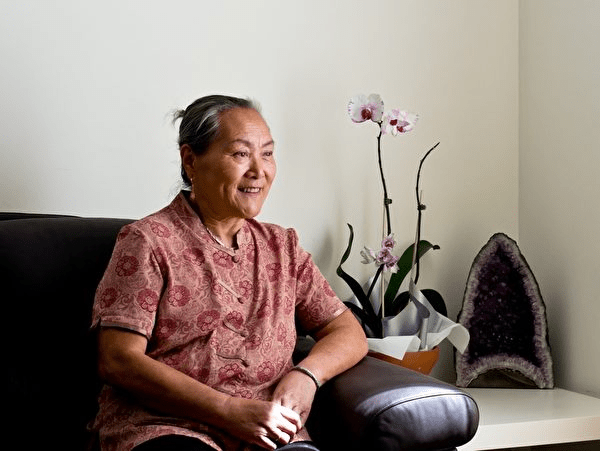
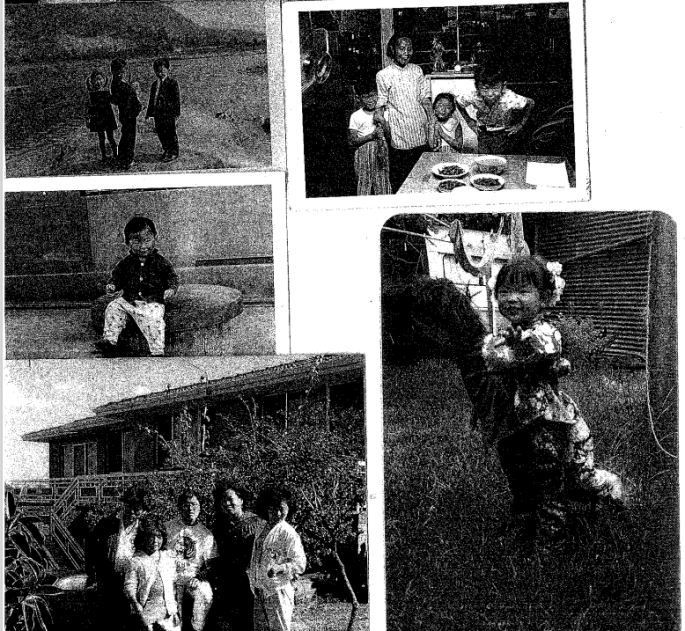
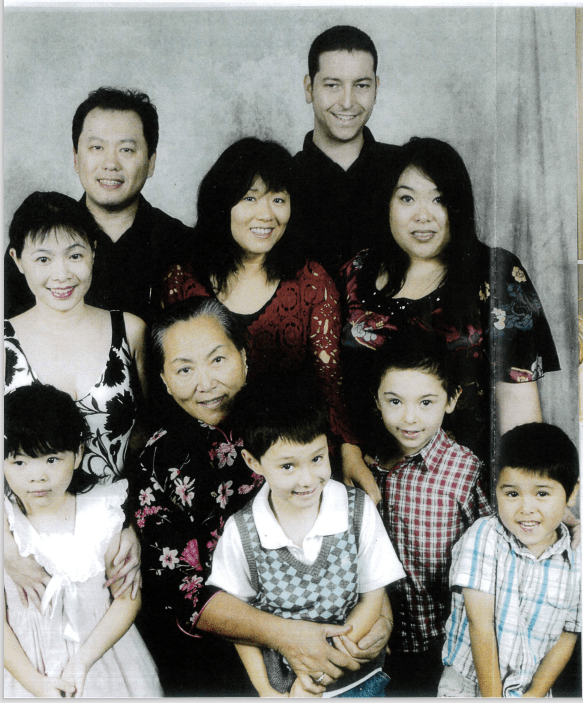
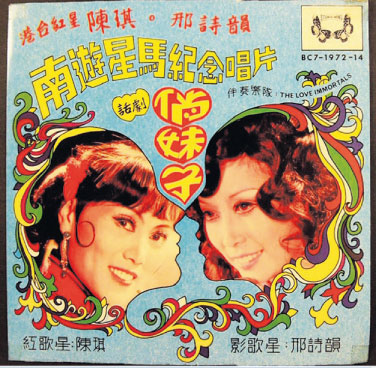
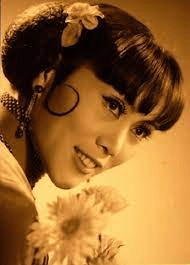
 陳旭@perth